Producing synthetic SAF calls for carbon—which direct air capture can filter directly from the atmosphere, potentially giving rise to a closed carbon cycle for climate-friendly flight.
Direct air capture: CO₂ from the air as a raw material for SAF
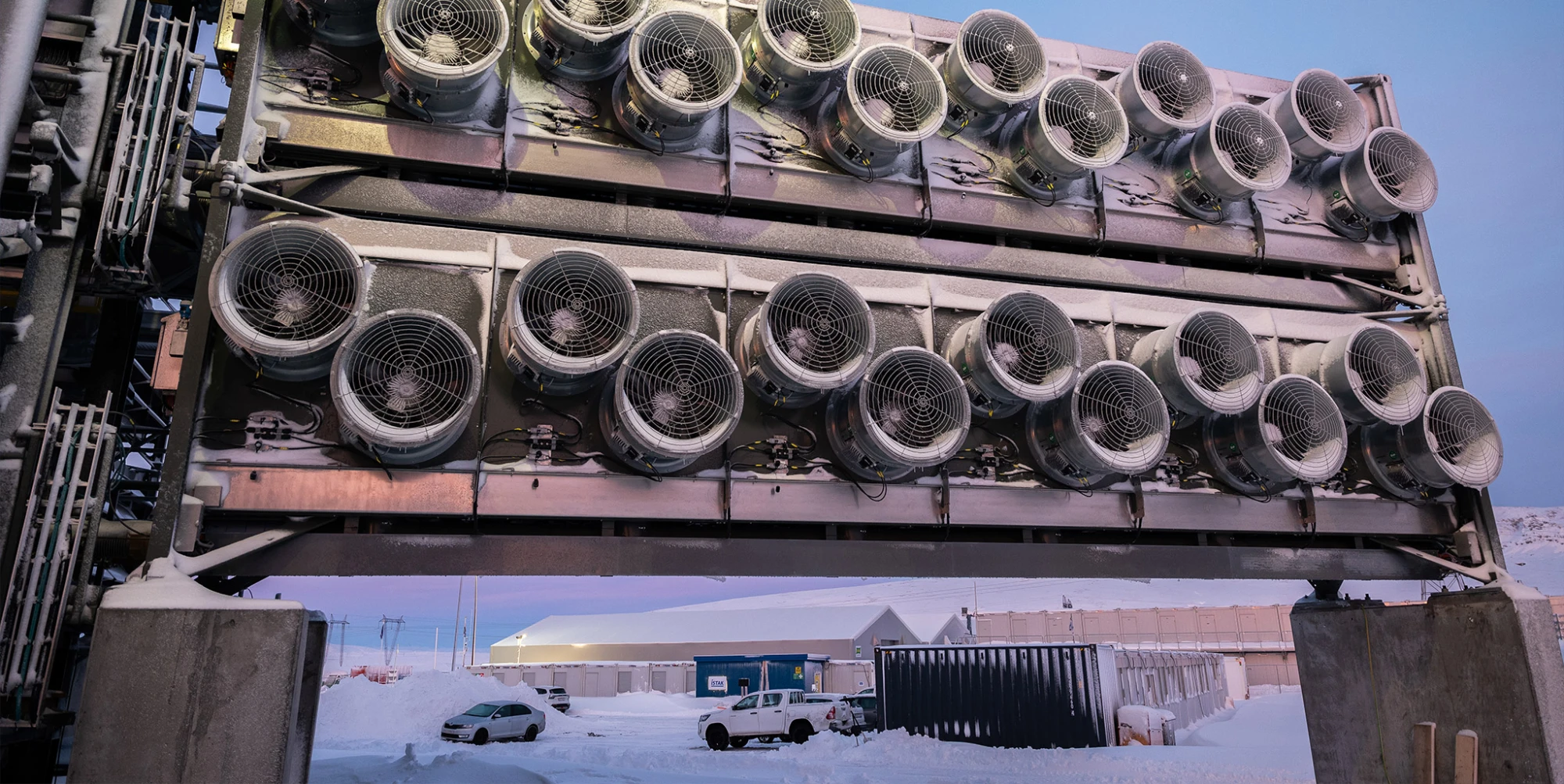
Direct air capture (DAC)
Direct air capture (DAC) removes CO₂ directly from the atmosphere. Systems draw in outside air and use chemical or physical filter materials to bind the CO₂ it contains. However, as the CO₂ concentration in the ambient air is very low, DAC requires much more energy and is more expensive than existing carbon capture processes.
Sustainable aviation fuels (SAFs) are seen as a key lever on the way to climate-neutral aviation—provided enough carbon is available for their production. This puts the spotlight on a technology that filters carbon in the form of climate-damaging CO₂ directly from the atmosphere: direct air capture (DAC).
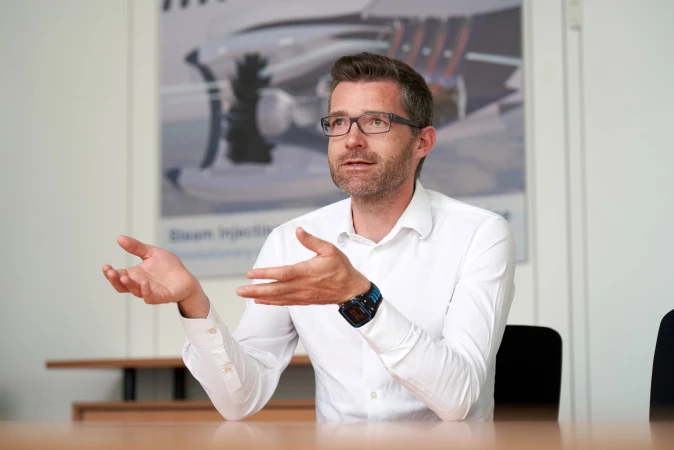
“Captured CO₂ can be used as a raw material for the production of synthetic SAF. That’s what makes DAC technology so appealing to the aviation industry as a potential source of carbon,” says Jan von Frowein, Innovation Management Representative at MTU Aero Engines. The aim is to achieve as closed a carbon cycle as possible: CO₂ is extracted from the ambient air, processed into synthetic fuel, and released again during combustion in flight. The key consideration is that this way, no additional fossil carbon is released into the atmosphere. Along with the use of renewable electricity to produce the fuel, this could greatly reduce the net CO₂ emissions of flight operations.
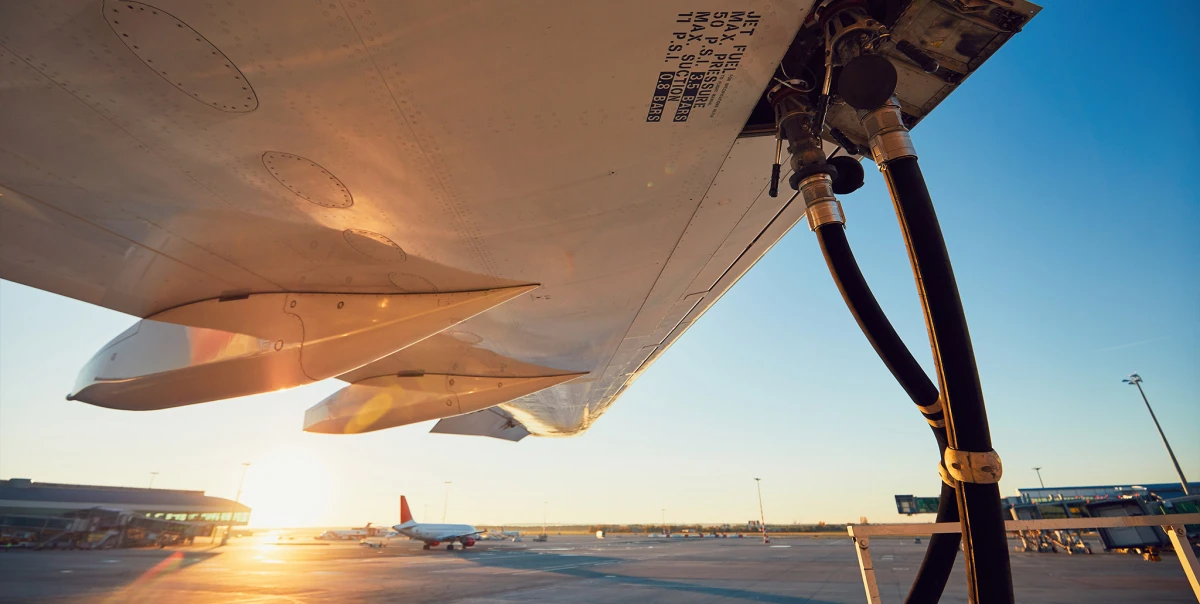
One major advantage of SAFs is that they are “drop-in” fuels: In other words, they can be blended with fossil kerosene in admixtures of up to 50 percent with no need for technical modifications to either the aircraft or the engines. That makes it possible to gradually reduce the climate impact of flight operations while still using the existing fleet. SAFs are seen as an indispensable building block for decarbonization—especially on long-haul flights, for which neither fuel cells nor battery-electric concepts are an option in the near future.
Biogenic sources aren’t enough
A basic distinction is made between SAF of biogenic and synthetic origin. “Today, the most widely available SAFs are biogenic, such as those based on used cooking oils or animal fats,” von Frowein says. “But current estimates suggest that these biogenic sources won’t be sufficient in the long term to cover the SAF requirements of the entire aviation industry. Consequently, we need synthetic SAF.”
“The ReFuelEU Aviation regulation stipulates increasing minimum shares for sustainable fuels at every airport in the European Union,” explains Dr. Valentin Batteiger, who coordinates the Future Aviation Fuels research area at the Bauhaus Luftfahrt think tank. Starting in 2030, a share of 6 percent SAF and a subshare of 1.2 percent for synthetic fuels will apply; by 2050, the SAF share is to increase to 70 percent and the synthetic share to 35 percent. This means aviation has to find reliable sources of CO₂ if it is to meet the increasing demand for synthetic SAF in the future.
The power-to-liquid process uses renewable energy to produce hydrogen, synthesizes it with carbon dioxide to form hydrocarbons and processes these into a liquid fuel.
Synthetic SAFs based on hydrogen and CO₂ are produced in power-to-liquid (PtL) processes. The hydrogen is obtained from water by electrolysis, and then renewable electricity is used to produce the SAF. The carbon source is carbon dioxide, which is either sourced from industrial processes or—in the long term—will be taken directly from the atmosphere. “That’s how direct air capture could become a key component for SAF production,” von Frowein says.
At present, the first PtL plants are mainly using high-purity sources of biogenic CO₂, such as plants that produce ethanol or biogas. At the same time, the “DAC ready” concept is already becoming established: New plants are being planned from the outset to include the space, interfaces, and infrastructure necessary for the subsequent integration of direct air capture systems. This anticipates DAC’s technological development—even if it isn’t yet in widespread use.
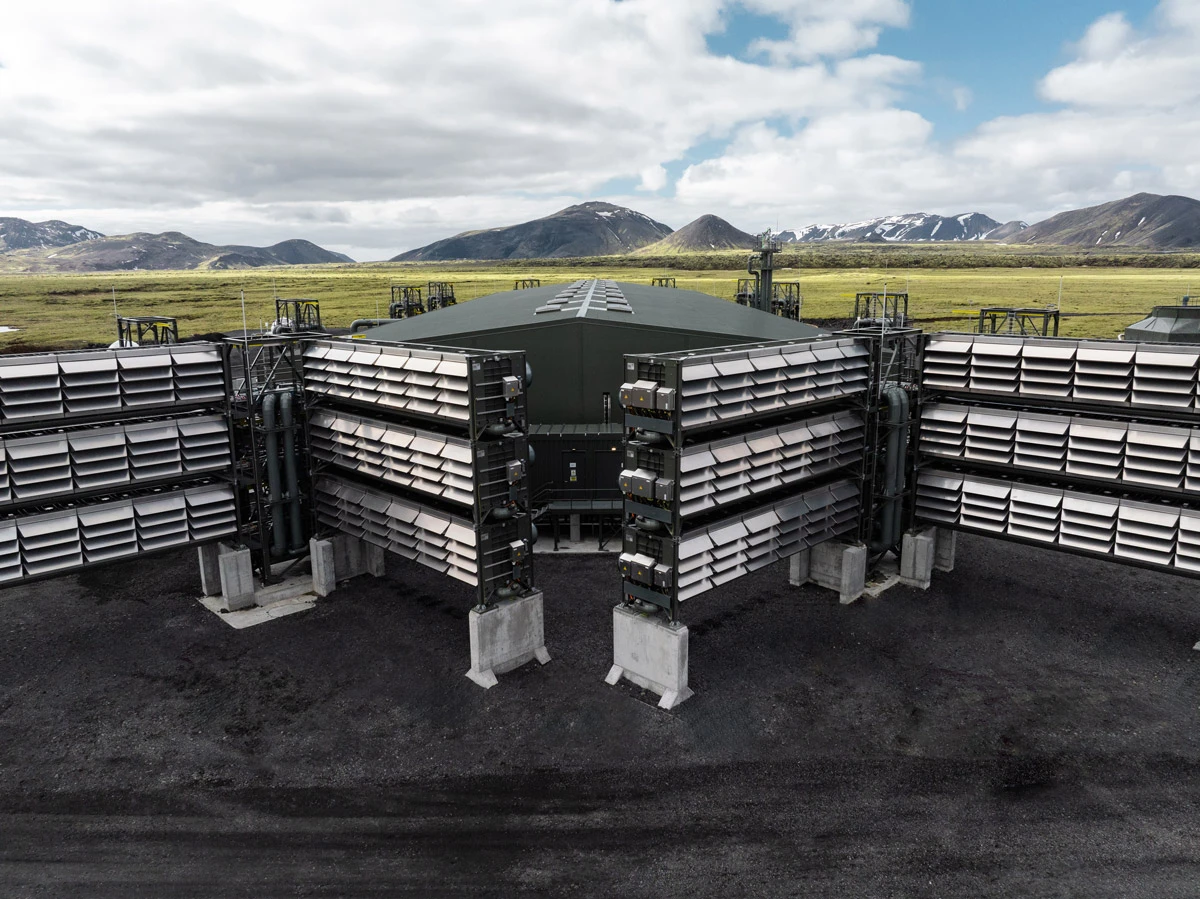
With DAC technology, carbon dioxide is filtered directly from the ambient air. Fans draw in air and pass it through reactors with special filter materials or liquids that selectively absorb CO₂ molecules while allowing nitrogen, oxygen, and the other components of air to pass unhindered. Next, the CO₂ is released again through the addition of heat or chemical processes. After it’s been purified, it would then be available as a raw material for the production of synthetic SAF.
Not yet on an industrial scale
But why is that? Although DAC technology is no longer just a pipe dream, it’s still at an early stage of scaling. The plants that have been built around the world so far are mostly pilot and demonstration projects. One of the largest is the “Mammoth” plant in Iceland. Owned by the Swiss company Climeworks, Mammoth is designed to capture around 36,000 metric tons of CO₂ per year. “In 2024, a total of around 59,000 metric tons of CO₂ was captured worldwide using direct air capture,” von Frowein says. “Measured against global emissions of some 40 billion metric tons, however, the technology’s impact so far has been marginal.”
“The main challenge lies less in the basic functionality of DAC and more in its efficiency,” Batteiger says. “The CO₂ concentration in ambient air is just over 0.04 percent.” While this value is already high enough to be an issue for the climate, it is extremely low for any technical purposes—which makes capturing CO₂ particularly cost- and energy-intensive.
Currently, it costs around 500–1,000 euros to capture one metric ton of CO₂. “The crucial question in the years ahead is whether it will be possible to economically scale up direct air capture—and thus actually make CO₂ from the air a viable raw material for future aviation,” Batteiger says. According to a study by ETH Zurich, prices could fall to around 300 euros in the long term, but this would still represent a significant cost contribution to the production of synthetic SAF using the PtL process. Given how much energy direct air capture systems require, another crucial issue will be the availability of sufficient green energy. Most of the space and materials that such systems need is devoted to generating the energy needed for the process.
“DAC technology is no substitute for the development of innovative and more efficient products for more sustainable aviation”
Jan von Frowein
Repräsentant Innovationsmanagement bei der MTU Aero Engines
The priority is on avoiding CO₂
Direct air capture is being discussed not only as a possible source of CO₂ for synthetic kerosene, but also as an important instrument for removing CO₂ that’s already in the atmosphere, with a view to achieving the climate targets that have been set. However, critics warn against using CO₂ removal technologies as a justification for putting less effort into reducing emissions now—and thus postponing necessary structural changes.
“DAC technology is no substitute for the development of innovative and more efficient products for more sustainable aviation,” von Frowein says. Accordingly, MTU’s focus for its future propulsion concepts is on greatly reducing climate-damaging emissions—in particular CO₂, nitrogen oxides, and particulates, which lead to the formation of contrails. “It’s also important to continuously reduce energy consumption—and thus the need for fuel or SAF as well.” MTU is also continuously reducing emissions from its own production and maintenance activities and is switching to low-emission energy generation at its sites. Nonetheless, direct air capture remains an important building block for the industry as a source of raw materials, and its further development is being followed closely.