Twenty years ago, the first A380 took off, powered by GP7200 engines. The aircraft continues to inspire many people to this day.
Twenty years of power: The A380 and the GP7000
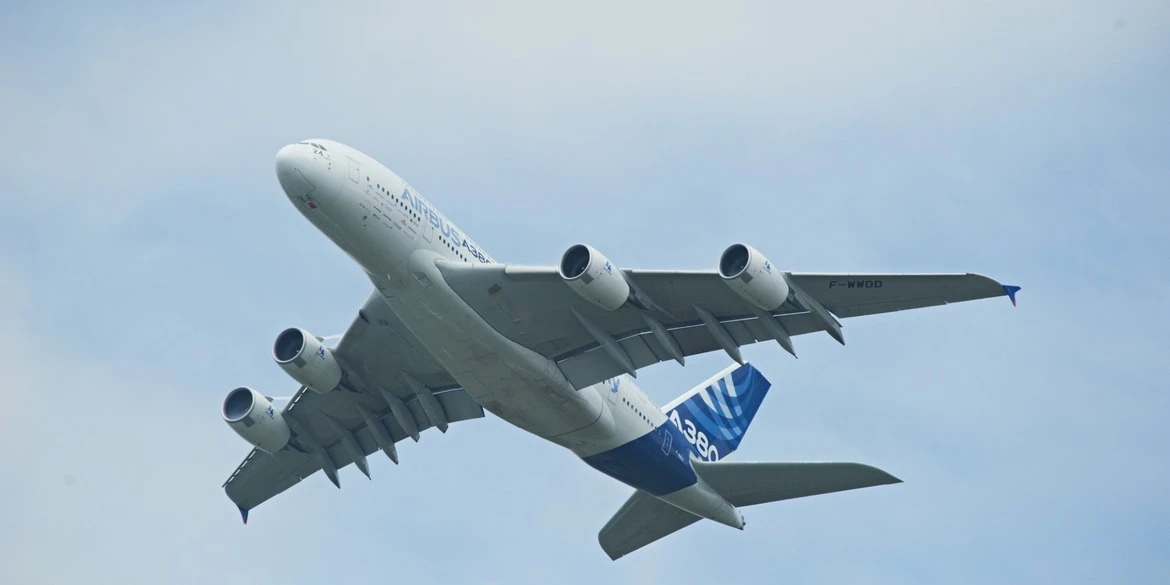
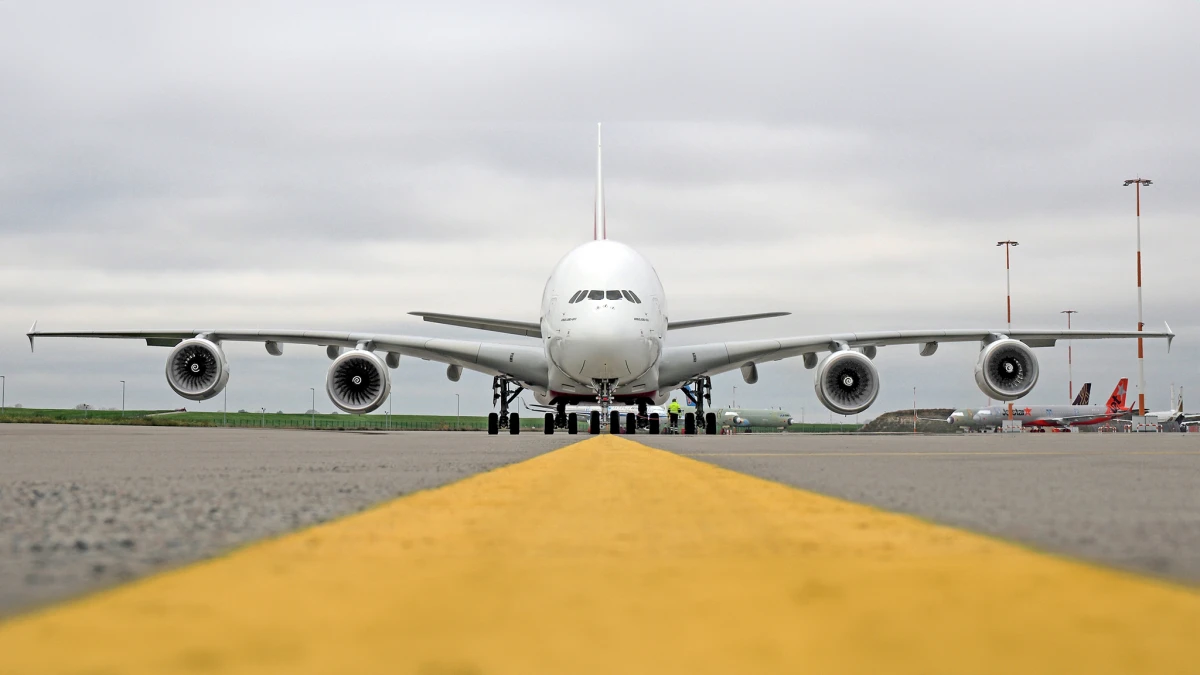
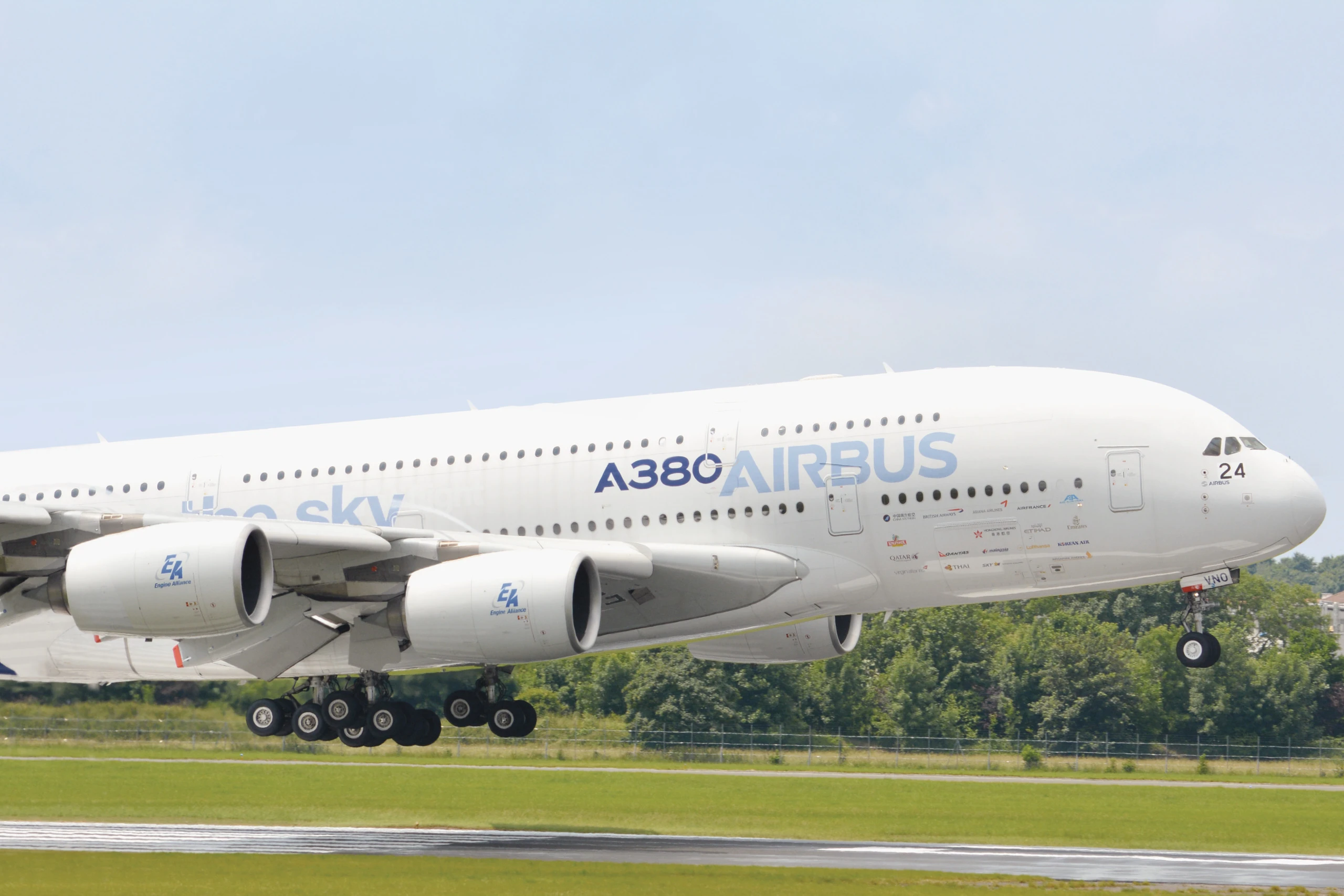
Toulouse, August 25, 2006. Rain falls from an overcast sky. But for the engineers and mechanics at Airbus and the Engine Alliance, this Friday could hardly be more dazzling. At last, the A380’s maiden flight with GP7200 engines is about to take place—just a few weeks after the world’s largest passenger aircraft made its debut at the Farnborough International Airshow. After a faultless takeoff and a flight time of just over four hours, the aircraft with serial number MSN 009 lands safely back at Toulouse-Blagnac Airport. For Airbus, this good news came at just the right time: The company had already had to notify its launch customers of delivery delays on several occasions.
Wherever the Big Bird made an appearance, it attracted everyone’s attention. For example, during evacuation testing at Hamburg Airport, or throughout the series of test flights that began in November 2006, taking in Düsseldorf, Singapore, Kuala Lumpur, Beijing, Shanghai, Hong Kong, Tokyo, Sydney, Johannesburg, and Vancouver. On April 23, 2007, the A380 with its GP7200 engines received type certification from EASA after more than 111 flights and 1,348 flight hours.
Singapore Airlines put the very first A380 into scheduled service on the route from Singapore to Sydney on October 25, 2007. And on July 28, 2008, it was Emirates’ turn with the second A380 to be delivered, which was also the first production aircraft powered by GP7200 engines. Initially, this aircraft operated daily nonstop flights from Dubai to New York and London Heathrow; Sydney and Auckland were added in 2009.
How Boeing sparked the development of the GP7000
For MTU, the GP7200 remains its largest involvement in a commercial engine program to date. But the company that Airbus and all A380 customers actually have to thank for the very existence of the GP7000 is a competitor: Boeing. In the mid-1990s, the U.S. aircraft manufacturer made several attempts to develop a commercial aircraft based on the 747-400 but with even greater capacity. However, there was no engine suitable for the planned 747-500X and 747-600X superjumbos, and none of the three major engine manufacturers wanted to develop such an engine on its own.
So as 1995 moved into 1996, GE Aviation, Pratt & Whitney, and Boeing began talks about a possible joint venture between the two U.S.-based engine manufacturers with the aim of developing a suitable new engine together. In May 1996, the collaboration agreement for the Engine Alliance was signed, and work on the GP7000 began soon thereafter.
But it wasn’t long before Boeing put its plans for the 747-500X and 747-600X on ice. Thankfully, the preliminary work on the engine wasn’t done in vain: In May 1998, a memorandum of understanding was signed stating that the Engine Alliance would develop the GP7000 for the world’s largest commercial aircraft, which was then still known as the A3XX.
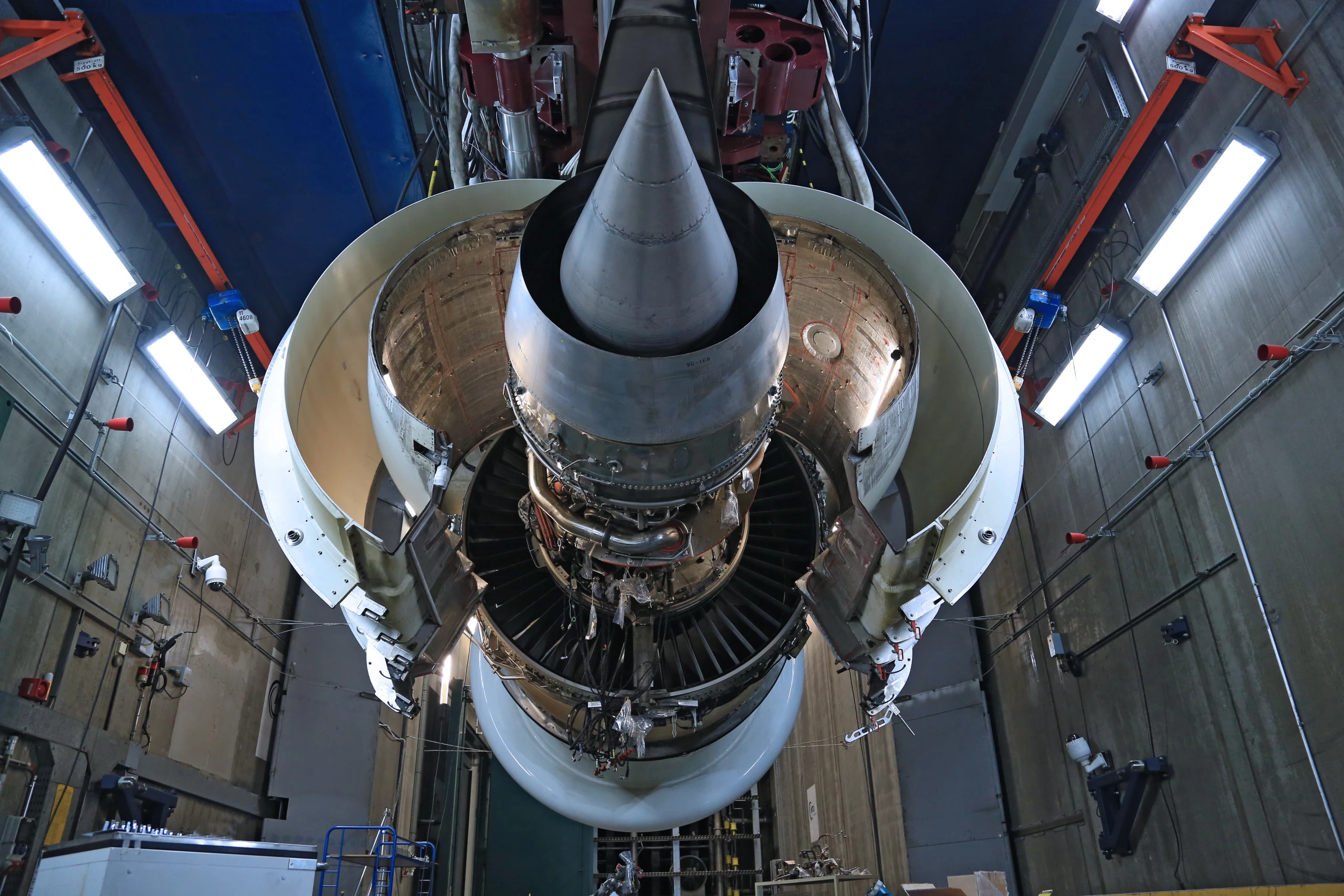

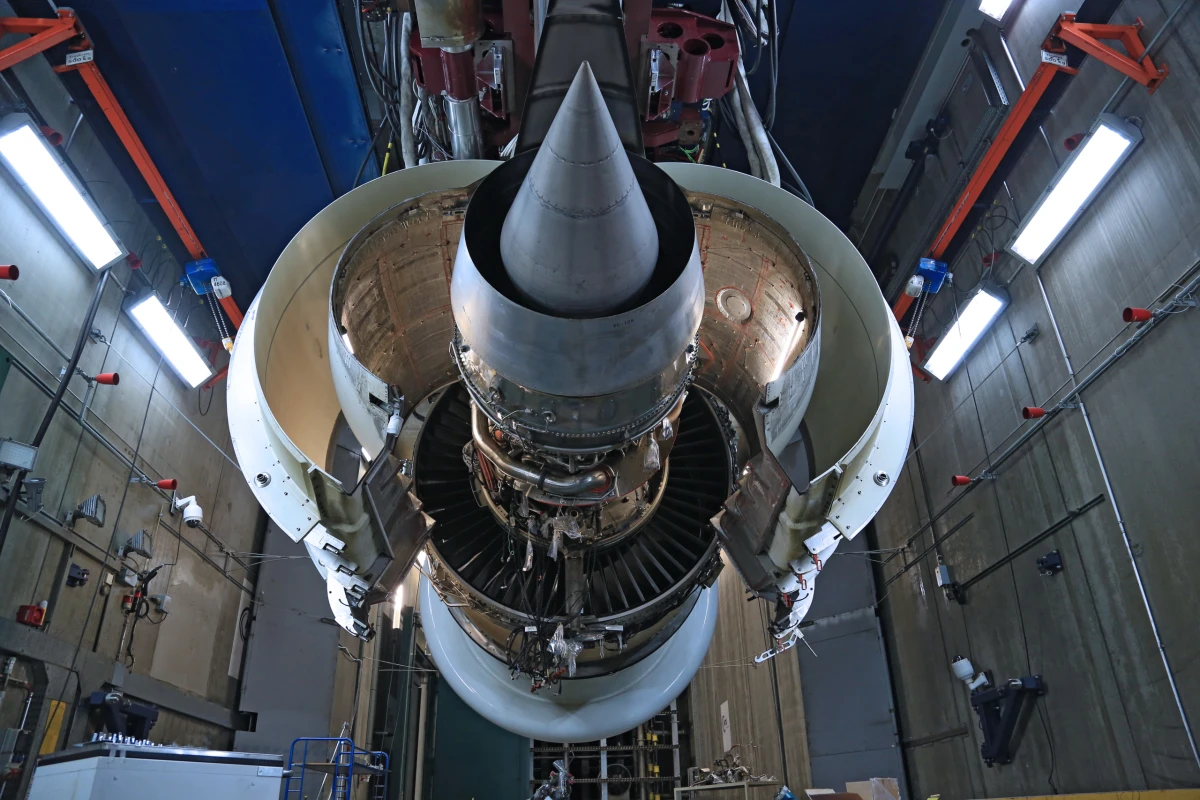
The GP7000 combines low fuel consumption with reduced weight and lower noise emissions.
A380: Great aircraft, wrong market?
This widebody aircraft can seat more than 800 passengers in a single-class configuration. It is at its most cost-effective when operated in a hub-and-spoke system, with widebody aircraft connecting major hubs and passengers then switching to smaller aircraft to continue their journey along less busy routes, the spokes. One example is Emirates and its hub in Dubai, which puts nearly all the world’s major cities in reach with just one transfer. Over the past 20 years, though, direct flights have become ever more popular, thanks in no small part to twin-engine long-haul airliners such as the Airbus A350 and the Boeing 787 Dreamliner. Four engines also mean four units to maintain, which is a significant cost factor for airlines. In 2021, after 251 aircraft had been built, production of the A380 came to an end. Emirates operates 119 of the 190 A380s still in service. Other airlines operating the A380 with GP7000 engines include Etihad Airways, Korean Air, and Qatar Airways. The quiet and comfortable A380 remains very popular with passengers and crews to this day.
Technology from two engine families
The GP7000 brought two worlds together: GE was responsible for the high-pressure turbine and high-pressure compressor, which borrowed significantly from the GE90 that powered the Boeing 777, but with certain components adjusted for the lower thrust requirements of the A380. Pratt & Whitney followed suit, capitalizing on its own product for the 777, the PW4000, for the low-pressure turbine and low-pressure compressor.
The Engine Alliance is a joint venture between GE Aviation and Pratt & Whitney, but the two partners didn’t manufacture the engine alone. MTU Aero Engines secured most of the remaining program share. Germany’s leading engine manufacturer had a 22.5 percent stake in the GP7000 and was responsible for developing, manufacturing, and assembling the entire low-pressure turbine and the turbine center frame, as well as manufacturing the blades and disks for the high-pressure turbine. In addition, maintenance of the low-pressure turbine takes place at MTU in Munich.
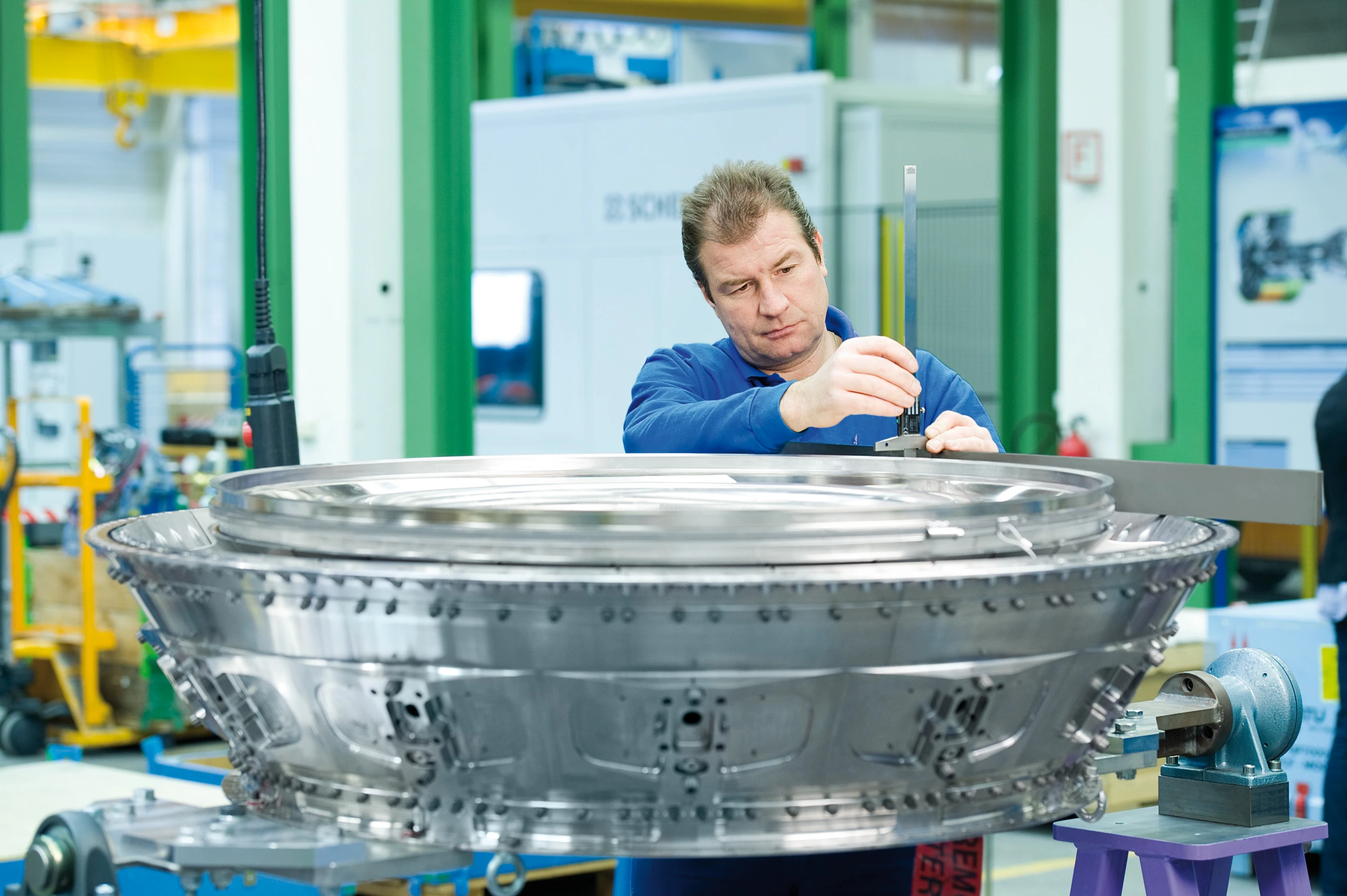
At MTU in Munich, the low-pressure turbine is maintained.
With production halted, what counts is maintenance
For MTU, the GP7000 program was an important milestone. It gave the Munich team a foothold in the next generation of widebody engines: The contract to develop and manufacture the turbine center frame for the GP7000 was followed by corresponding work on the GEnx (787, 747-8) and the GE9X (777-8X and 777-9X). Last but not least, MTU Maintenance benefited from contracts and gained valuable expertise from maintaining widebody engines.
Now that production of the A380 and GP7200 has ended, the Engine Alliance and MTU are focusing on maintenance. In June 2024, MTU overhauled its 100th GP7200 low-pressure turbine in Munich, with support from its sites in Hannover and Malaysia. And since 2023, the Engine Alliance and MLS have had a strategic partnership for GP7200 lease pool assets.
Incidentally, MSN 009—the first A380 powered by GP7200 engines—continued operating as a test aircraft until spring 2008. It was then converted into a passenger aircraft and delivered to Emirates on June 4, 2010, where it was assigned the registration number A6-EDJ. It has been parked at Dubai International Airport since March 24, 2020.
An aircraft of superlatives
-
The fuselage of the A380 is 72 meters long, which is roughly the length of two soccer fields.
-
At 24 meters, the A380’s tail assembly stands as tall as an eight-story building.
-
It has a wingspan of 80 meters, and each wing is 845 square meters in area.
-
The cabling inside each A380 stretches to 530 kilometers.
-
The aircraft’s two decks are 50 and 48 meters long—meaning each is much longer than the distance the Wright brothers covered during their first powered flight in 1903 (36 meters).
-
The A380 is certified to carry a maximum of 853 passengers and 20 crew. During testing in March 2006, the full complement of nearly 900 people was successfully evacuated in less than 90 seconds. No real-life emergency has yet occurred.
FAQ
Why is the Airbus A380 considered the world’s largest passenger aircraft?
The Airbus A380 is the only mass-produced commercial aircraft to feature two full-length passenger decks, and its dimensions make it undisputedly the largest commercial passenger jet in history. The A380 is certified to carry up to 853 passengers, although the highest number of seats ever offered was in a 615-seat configuration by Emirates.Why was production of the Airbus A380 discontinued?
With its four engines, the A380 had significantly higher operating and fuel costs than modern twin-engine widebody jets. In addition, airlines and passengers today prefer direct flights rather than connecting flights via hubs using large aircraft. Smaller jets are better suited for these direct flights. As a result, the Airbus A380 has proven to be too large and too heavy to operate profitably in many markets.Why are some airlines bringing the Airbus A380 back into service?
Global air travel came to a virtual standstill during the coronavirus pandemic, but demand surged afterward. For many airlines, reactivating A380s that had already been grounded was, in the short term, the only way to handle the swell in customer demand. At the same time, delivery of the Boeing 777X was delayed by about seven years; the A380 is filling that gap as well.What role does MTU Aero Engines play in the GP7000 engine for the Airbus A380?
MTU Aero Engines has specific areas of responsibility: For Pratt & Whitney’s share, MTU is responsible for developing and manufacturing the low-pressure turbine. For GE’s share, MTU is in charge of developing and manufacturing the turbine center frame and for producing components for the high-pressure turbine. In addition, as part of Pratt & Whitney’s share, MTU has entered into an aftermarket agreement to provide repair services for the low-pressure turbine at its Munich site.Why is the Airbus A380 relatively quiet despite its size?
Despite its impressive size, the A380 is considered a comparatively quiet aircraft. On the ground, the large turbofan engines (GP7000s or Rolls-Royce Trent 900s), with their high bypass ratio, ensure that a large portion of the air flows past the actual engine core, thereby reducing noise. It remains pleasantly quiet in the cabin as well—thanks to extensive soundproofing and the placement of the engines far out on the wings, which puts passengers at a considerably greater distance from the noise.What role does the Airbus A380 play in sustainable aviation technologies such as SAF and hydrogen?
Airbus uses the first A380 prototype as a test aircraft and is now putting an even newer aircraft into service for that purpose. As early as 2022, 100 percent sustainable aviation fuel (SAF) was successfully tested in one of four engines. The planned ZeroE test campaign, which was to feature a fifth hydrogen-powered propeller mounted on top of the fuselage, has been canceled. However, test flights are scheduled for 2029 using an open-rotor engine in place of the left inner turbofan engine. The A380, with its wings mounted well above the ground and a spacious cabin that can easily accommodate test instruments, is well suited for this purpose.