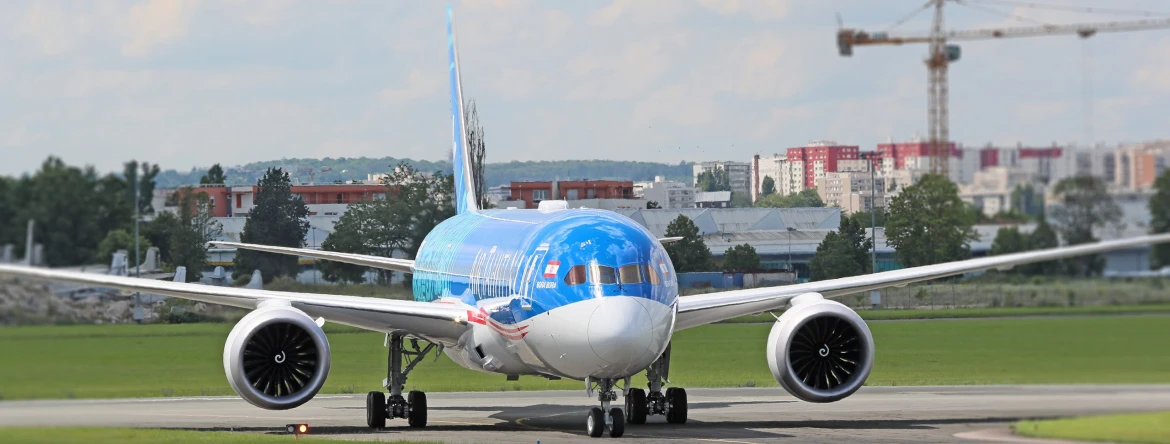
The first commercial aircraft made of lightweight, high-strength composite materials marked a revolution in aircraft construction—and made the Boeing 787 the pioneer of a new generation.
Boeing 787 – into the 21st century with the Dreamliner
- Boeing 747: Queen of the Skies
- The Boeing 737: How a simple jet revolutionized aviation
- Airbus A400M – modern military transporter and all-around talent
- Airbus A220 – The innovative medium-haul jet from Canada
- Boeing 777X – the largest twin-engine jet in the world
- Airbus A321XLR: A new chapter for aviation
- The Airbus A380 – the world’s largest passenger aircraft
- Airbus A319 – a small aircraft for a wide range of tasks
- Airbus A320 – a medium-haul bestseller for almost 40 years
- Embraer E-Jet E2 – A game changer for regional routes
Boeing’s “plastic plane,” as it was jokingly called, marked a milestone in the development of modern passenger jets. For the first time, the fuselage of a commercial aircraft wasn’t made primarily of aluminum, but rather of a composite material consisting of carbon fiber and resin. The result was a structure that is both lightweight and highly durable. This new design not only reduced fuel consumption, but also led to improvements in passenger comfort: lower cabin pressure, larger windows, and higher humidity on board.
Having more humidity in the cabin air makes a noticeable difference for many passengers, especially on long-haul flights. But that wasn’t the only innovation the 787, marketed under the name “Dreamliner,” had to offer: It was the first aircraft where the windows at every seat could be dimmed electronically. This lets travelers reduce the amount of light coming in while still being able to look outside. The LED cabin lighting, which allows for different lighting moods, was also ahead of its time. Even the toilet has an unusual technical feature: When a sensor is triggered, a mechanical arm comes out and closes the lid within five seconds before the flush is activated; the idea is that this reduces noise.
The success of the 787 increased the pressure on Airbus to follow suit with a comparable aircraft. With the A350, the European manufacturer finally brought a cutting-edge long-haul jet to market as well. Despite significant delays and numerous setbacks, the 787 ultimately became the game-changer that Boeing had touted the program to be from the very beginning. Today, it encompasses an entire family of aircraft and is one of the most successful long-haul aircraft of its generation.
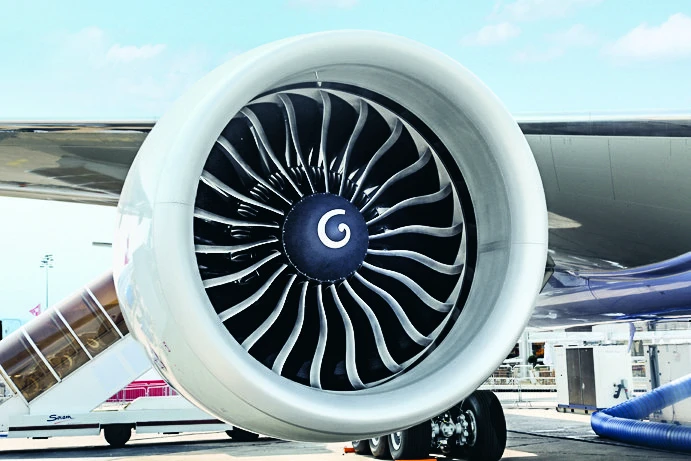

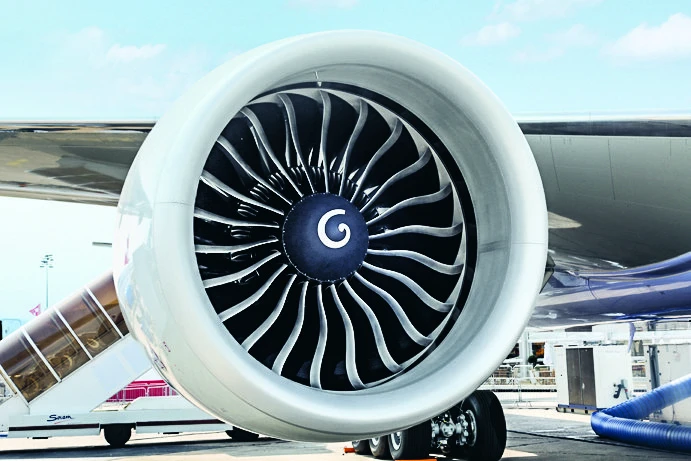
The GEnx engine from GE is based on the proven architecture of the GE90.
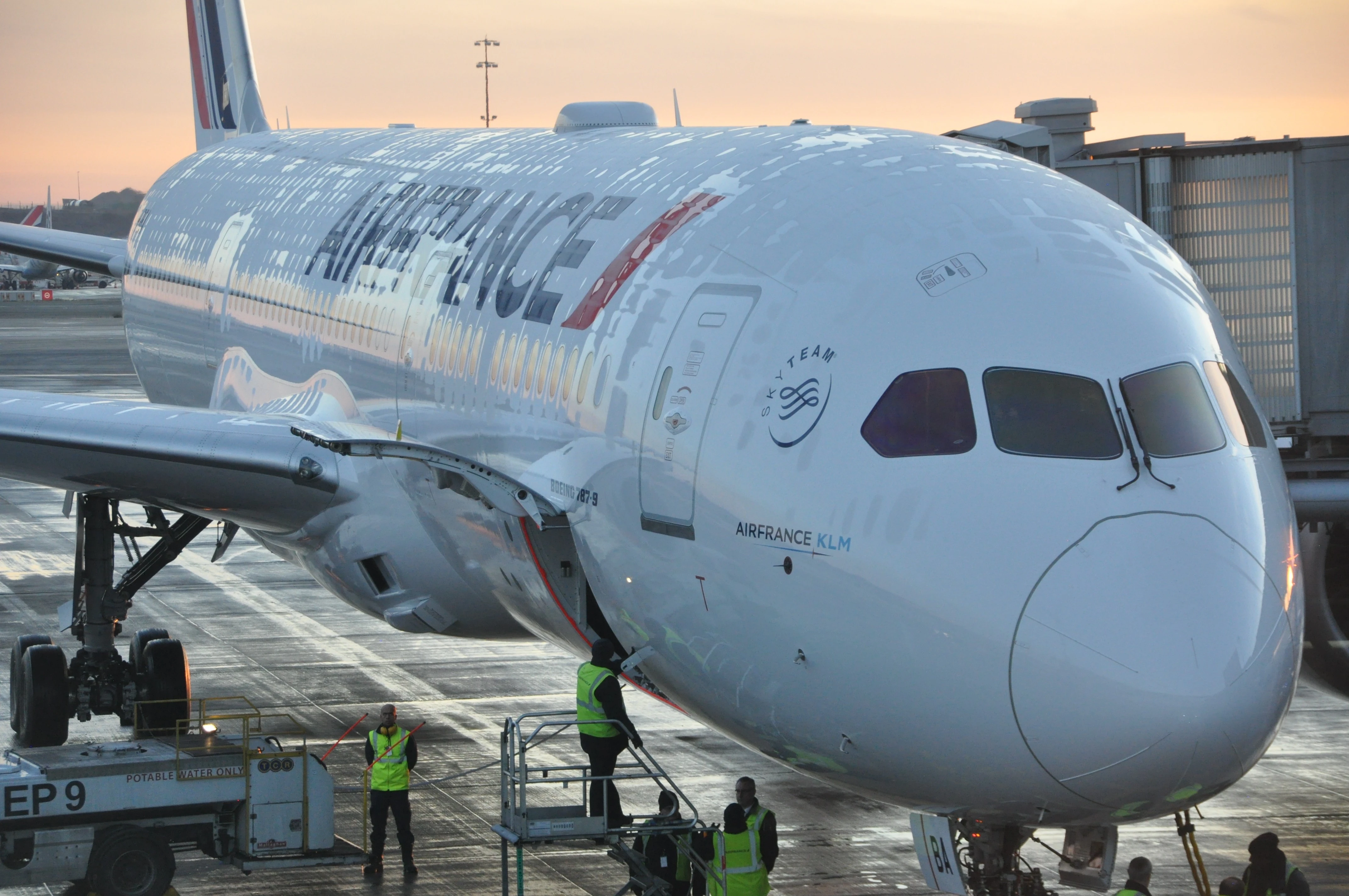
©Andreas Spaeth
©Andreas Spaeth
©Andreas Spaeth
The Boeing 787 family currently comprises three versions: the 787-8 as the basic model, the larger 787-9, and the 787-10, which is more than eleven and a half meters longer.
Boeing 787 – Facts, figures, dates
-
About 80 percent of the Dreamliner’s volume consists of composite materials. In terms of weight, composites account for about 50 percent, aluminum for 20 percent, titanium for 15 percent, steel for 10 percent, and other materials for 5 percent. By comparison, composite materials account for just 12 percent of the weight of a Boeing 777.
-
As a relatively small widebody aircraft with a long range, the 787 helped establish a new trend: Airlines were able to operate nonstop flights on intercontinental routes between secondary destinations, rather than routing passengers through major hubs. Examples included routes from Copenhagen to Oakland, California, and from Barcelona to Fort Lauderdale, Florida.
-
In 2018, Qantas launched its first nonstop service between Australia and London using the Boeing 787-9. The route from Perth to London is about 14,500 kilometers long and takes about 17 hours when heading north. The 787-9 also serves the slightly shorter route from Perth to Paris.
-
The Boeing 787 family currently comprises three versions: the 787-8 as the basic model, the larger 787-9, and the 787-10, which is more than eleven and a half meters longer. The 787-9 is by far the most successful. As of August 2026, 1,484 of the total 2,453 orders were for this model.
-
The 787 is currently the only commercial aircraft in which cabin air isn’t drawn from the engines as bleed air. Instead, it enters the air conditioning system through separate intake openings in the fuselage.
-
Unlike a fuselage made of aluminum, one made of composite materials doesn’t automatically act as a Faraday cage, so engineers incorporated fine metal fibers into segments of the 787’s fuselage. These ensure that lightning strikes can still be safely diverted around the cabin.
Boeing 787
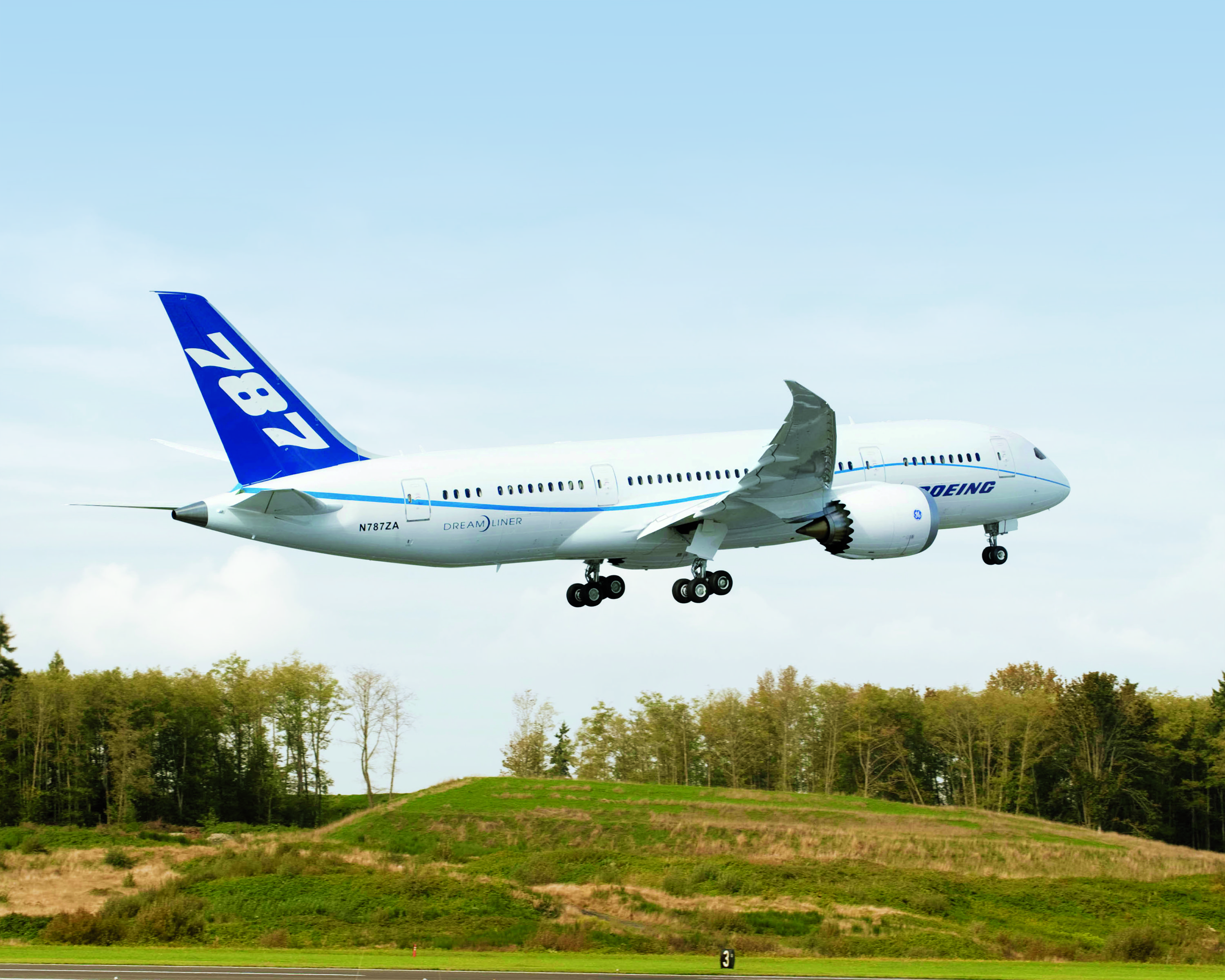
Boeing 787
- Type:
- Twin-engine widebody aircraft
- Manufacturer/origin:
- Boeing Commercial Airplanes, Seattle, U.S.
- Maiden flight:
- December 15, 2009
- Entry into service:
- October 28, 2011 (with ANA, as a 787-8)
- Produced:
- 2009–today
- Number built:
- 1,300 by August 2026
- Length:
- 56.70 meters (787-8) – 68.40 meters (787-10)
- Wingspan:
- 60.10 meters
- Range:
- 11,730 kilometers (787-10) – 14,010 kilometers (787-9)
- Cruising speed:
- Mach 0.85 (903 km/h)
- Seats (max./typical):
- 242/381 (787-8) – 330/440 (787-10)
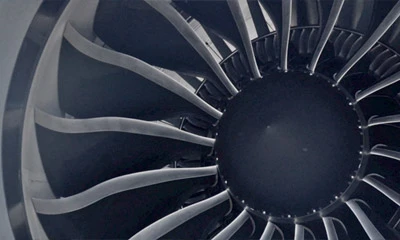
The Boeing 787 engine: the GEnx
The GEnx engine from GE is based on the proven architecture of the GE90. The GEnx-1B ver-sion was designed for medium-capacity widebody aircraft such as the Boeing 787 Dreamliner. MTU is a risk-and revenue-sharing partner in the GEnx program with a share of around 6.7 percent. The company is responsible for developing, manufacturing, and assembling the turbine center frame. Here, MTU can draw on its experience with the turbine center frame for the GP7000, which is testament to this component’s reliability. As per MTU’s involvement in the program, MTU Maintenance is responsible for maintaining this turbine center frame.
MTU will also be introducing full overhaul capability for GEnx engines at its facility MTU Maintenance Fort Worth. The new long-term GE Aerospace Branded Services Agreement (GBSA) enables MTU Maintenance Fort Worth to serve as an authorized service provider for GEnx engines with highest level of training and support, as well as greater access to proprie-tary overhaul and repair technology.
GEnx-1B
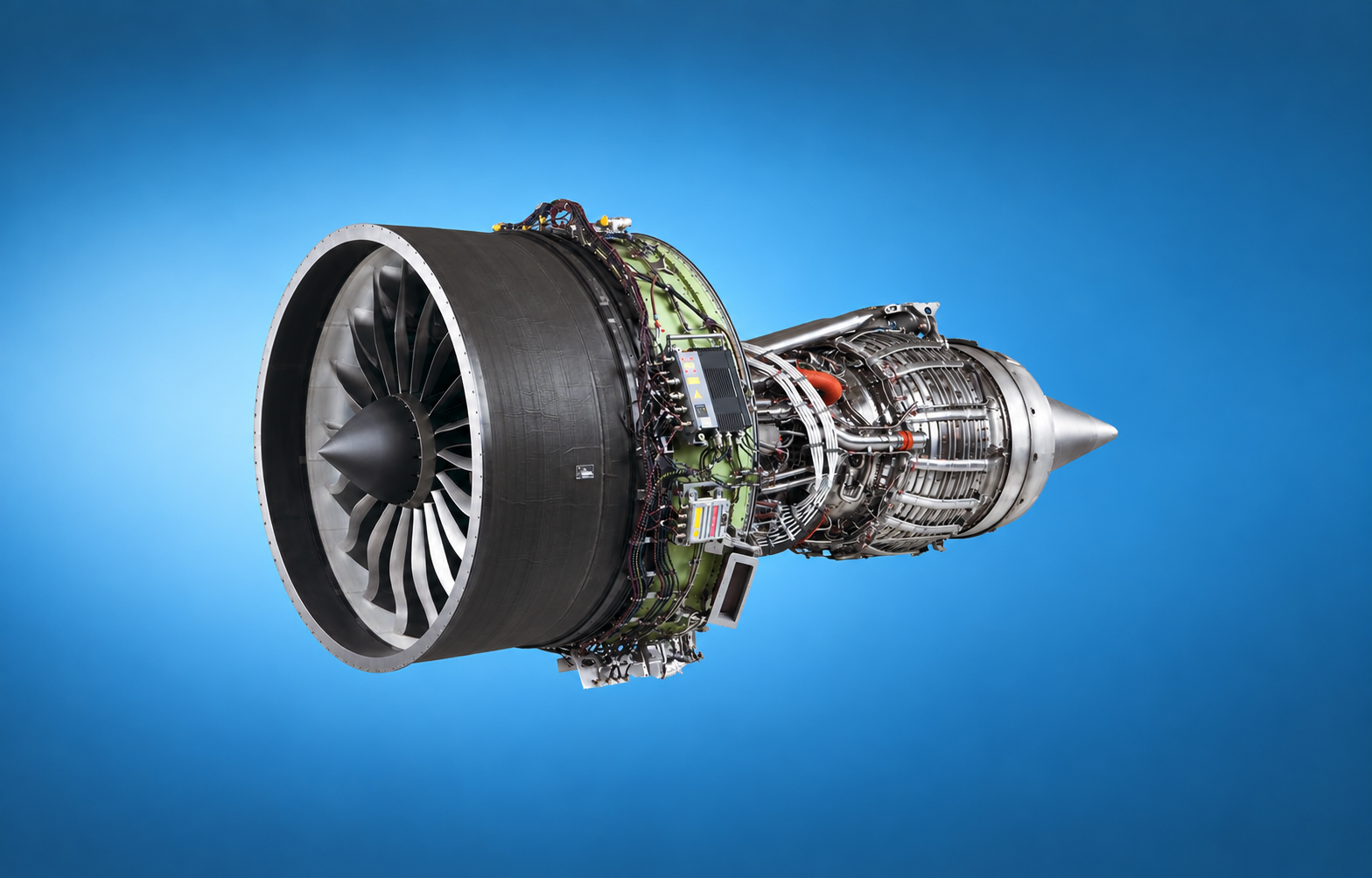
GEnx-1B
- Type:
- two-shaft turbofan engine
- Max. thrust:
- 69,800 - 76,100 lbf
- Bypass ratio (takeoff):
- 8,8 – 9,0
- Fan diameter:
- 9.25 ft
- MTU competencies:
- Development, manufacture and assembly of the turbine center frame and maintenance of the turbine center frame at MTU Maintenance Hannover.
The company organized a huge ceremony in nearby Everett. Thousands of employees and guests got to see the first 787-8, which seemed to be fully assembled and was painted in Boeing livery. It was then ceremoniously rolled out of the hangar and into the bright sunshine.
Andreas Spaeth
Aviation journalist
Aviation journalist Andreas Spaeth recalls
On July 8, 2007, I was in Seattle to report on the Boeing 787. A few people might be aware that the Americans write this date as 7/8/07. It was therefore clear to Boeing early on that the rollout absolutely had to take place on that day, so the company organized a huge ceremony in nearby Everett. Thousands of employees and guests got to see the first 787-8, which seemed to be fully assembled and was painted in Boeing livery. It was then ceremoniously rolled out of the hangar and into the bright sunshine.
Like many other visitors, I walked under the aircraft and marveled as I knocked on the carbon-fiber fuselage, which had an unusual sound. I was impressed. But it quickly became clear that the event was primarily symbolic, as the aircraft on display was neither fully equipped nor airworthy. Even the engines were missing, the cabin was empty, and some openings in the fuselage had been covered up in only a makeshift manner.
The first passenger flight took place much later than originally planned. Initially, the start of regular service was scheduled for late 2008, but it wasn’t until almost three years later that we finally gathered for it at Tokyo’s Narita Airport. All Nippon Airways (ANA) was the launch customer and the first operator of the 787. Flight NH7871 was scheduled to depart from Tokyo for Hong Kong on October 26, 2011. After lengthy ceremonies, the aircraft finally took off, and we landed in Hong Kong four hours and seven minutes later.
Just three months after that, I was back in Tokyo, where ANA made history with the 787 again: On January 21, 2012, the Dreamliner’s first long-haul scheduled flight departed from Tokyo-Haneda for Frankfurt.
FAQ
What makes the Boeing 787 Dreamliner a unique long-haul aircraft?
When it entered service in 2011, the Boeing 787 marked a significant step forward in commercial aviation. For the first time, a twin-engine aircraft of comparatively modest size was capable of serving long-haul routes between secondary airports. This enabled airlines to bypass major hubs and offer nonstop services on routes that had previously been uneconomical. The aircraft also introduced advanced materials that improved both efficiency and passenger comfort. Travelers notice this most directly through the higher cabin pressure, which corresponds to a lower cabin altitude of about 1,800 meters rather than the more typical 2,400 meters. As a result, long flights can feel less fatiguing. The 787 also maintains higher cabin humidity than most commercial aircraft, helping passengers arrive feeling more refreshed.Why is the Boeing 787 fuselage made primarily of carbon fiber reinforced polymer (CFRP)?
The extensive use of carbon fiber reinforced polymer, or CFRP, offers several advantages. Compared with conventional aluminum construction, the material provides substantial weight savings while delivering equal or greater structural strength. This contributes to a reduction in fuel consumption and emissions of around 20 percent. CFRP fuselage sections can also be manufactured as large integrated structures, simplifying production and eliminating the need for thousands of rivets and fasteners. In addition, CFRP is highly resistant to both corrosion and fatigue, reducing maintenance requirements. Its strength allows the aircraft to sustain higher cabin pressure, while its resistance to corrosion permits greater cabin humidity. Together, these characteristics contribute significantly to passenger comfort.How do the Boeing 787-8, 787-9, and 787-10 differ?
Although all three versions share the same wing design, they differ substantially in fuselage length, passenger capacity, and range. The most popular variant is the 787-9. With a range of up to 15,000 kilometers and seating for nearly 300 passengers, it offers an attractive balance of capacity and long-range capability. Compared with the baseline 787-8, its fuselage is approximately six meters longer, while maintaining a very similar range. The 787-10 extends the fuselage by another five meters. At more than 68 meters in length, it is the largest member of the family and is primarily used on high-demand routes that do not require ultra-long-range performance.Why does the Boeing 787 not use engine bleed air for cabin air conditioning?
Efficiency was a key design objective for the Boeing 787. In conventional airliners, cabin air is supplied using bleed air extracted from the engines, a process that reduces engine efficiency and increases fuel consumption. Additional energy is then required to cool and condition the extremely hot air before it enters the cabin. The 787 takes a different approach. Fresh air is drawn through two inlets located on the fuselage below the wing roots, compressed by electrically powered compressors, and passed through electric filtration systems before being distributed throughout the cabin.How is a composite aircraft fuselage protected against lightning strikes?
The aluminum skin of conventional aircraft acts as a Faraday cage, safely conducting lightning around the aircraft and preventing it from penetrating the structure. Composite materials such as CFRP require additional protective measures. To achieve this, conductive metallic layers, typically fine copper or aluminum mesh, are integrated into the outer surface of the composite fuselage sections. Thin metallic foils and embedded metal wires may also be used to enhance conductivity. These measures create a Faraday cage effect that safely channels lightning currents around the aircraft and prevents them from entering the internal structure.