Jets for private operators have never been more successful than they are today. As demand grows, MTU’s programs give it a prominent position in the market.
The business jet market is booming
©bombardier

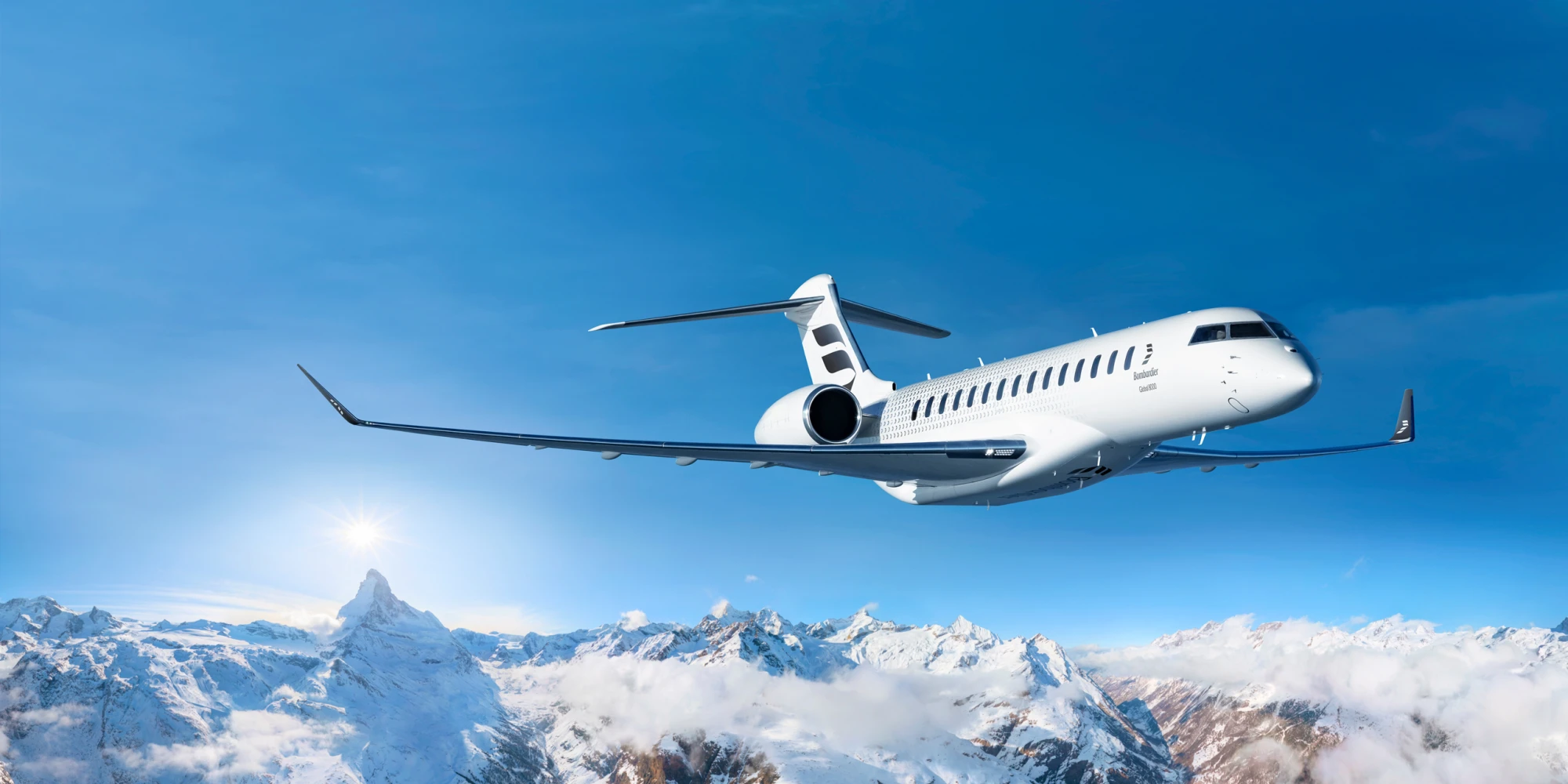
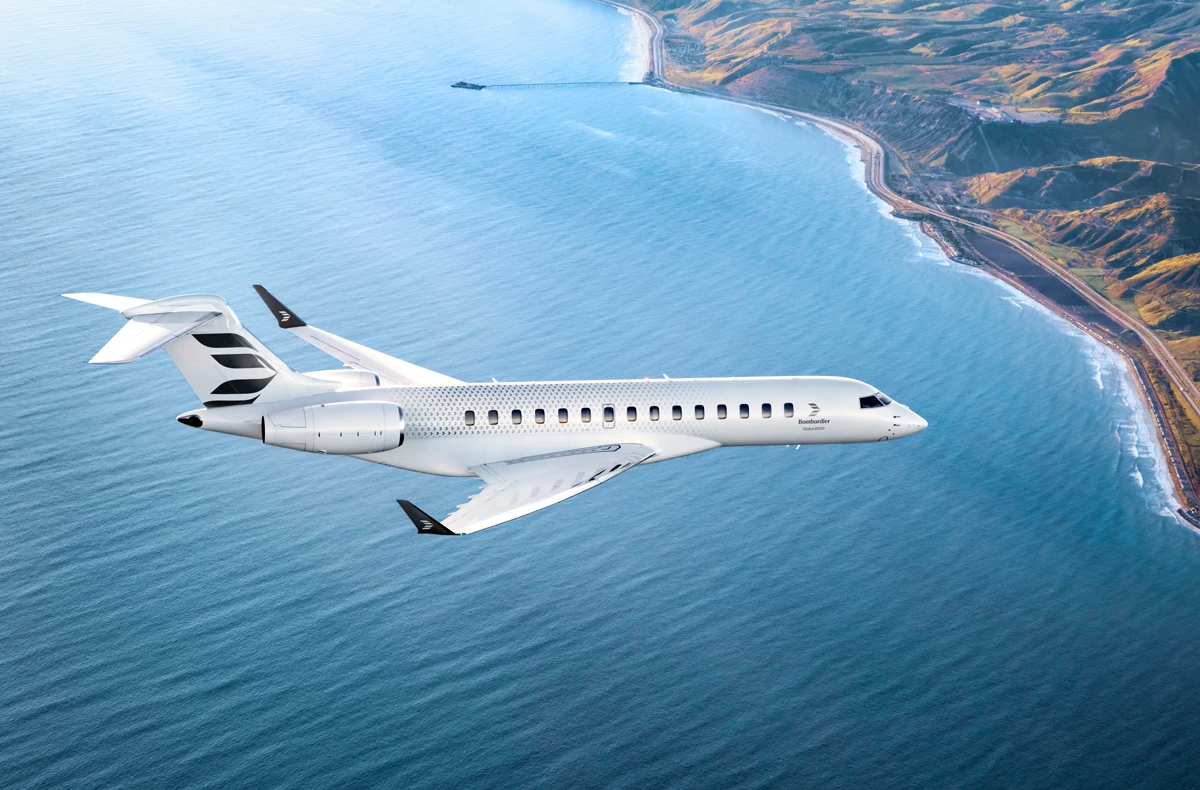
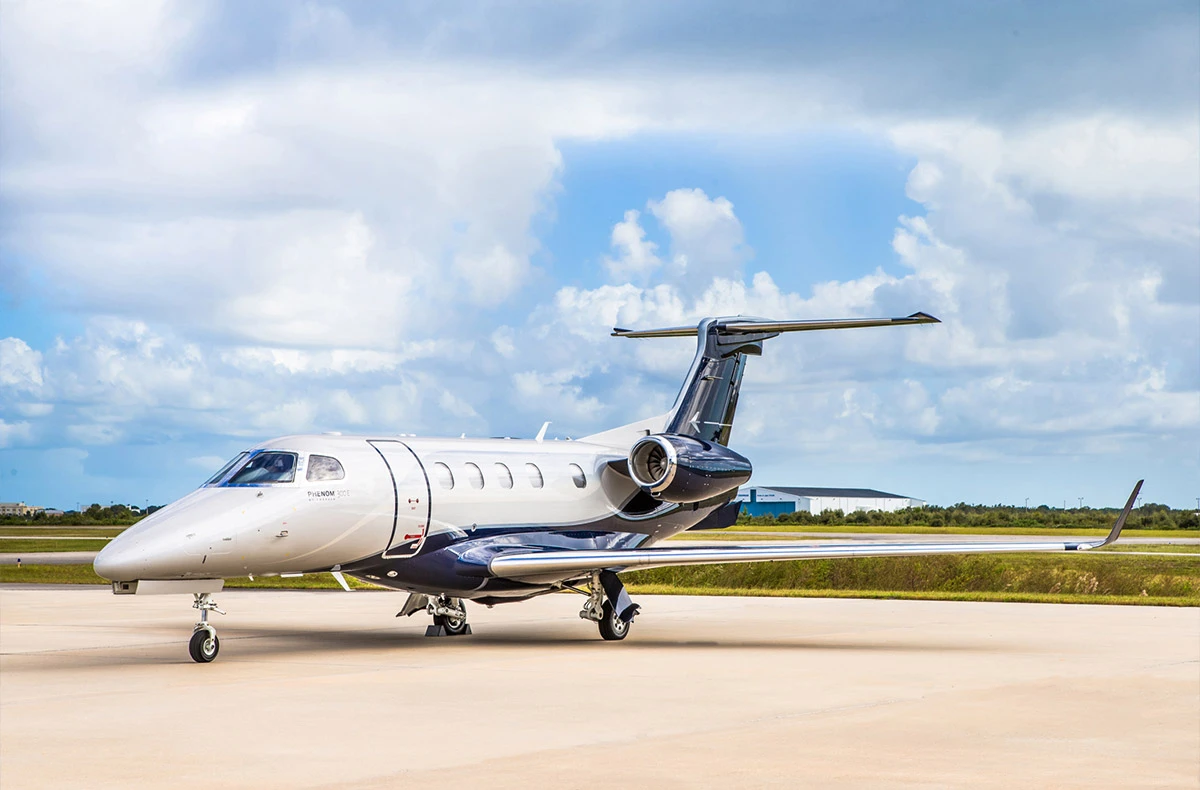
The business jet market has reached a milestone: At the start of 2026, Europe became the latest region to certify the Bombardier Global 8000. This Canadian business jet for up to 19 passengers is impressive in several respects. Its range of around 15,000 kilometers, for example, means it can fly nonstop from London to Perth in Western Australia. But it’s in terms of speed that the Global 8000 really sets a high bar: With a certification up to Mach 0.95—around 1,010 km/h—it is the fastest commercial aircraft since the Concorde. And in 2021, during a test flight for the world’s most expensive business jet, with a list price of some 80 million U.S. dollars, its pilots even took the aircraft supersonic, reaching a record speed of Mach 1.105.
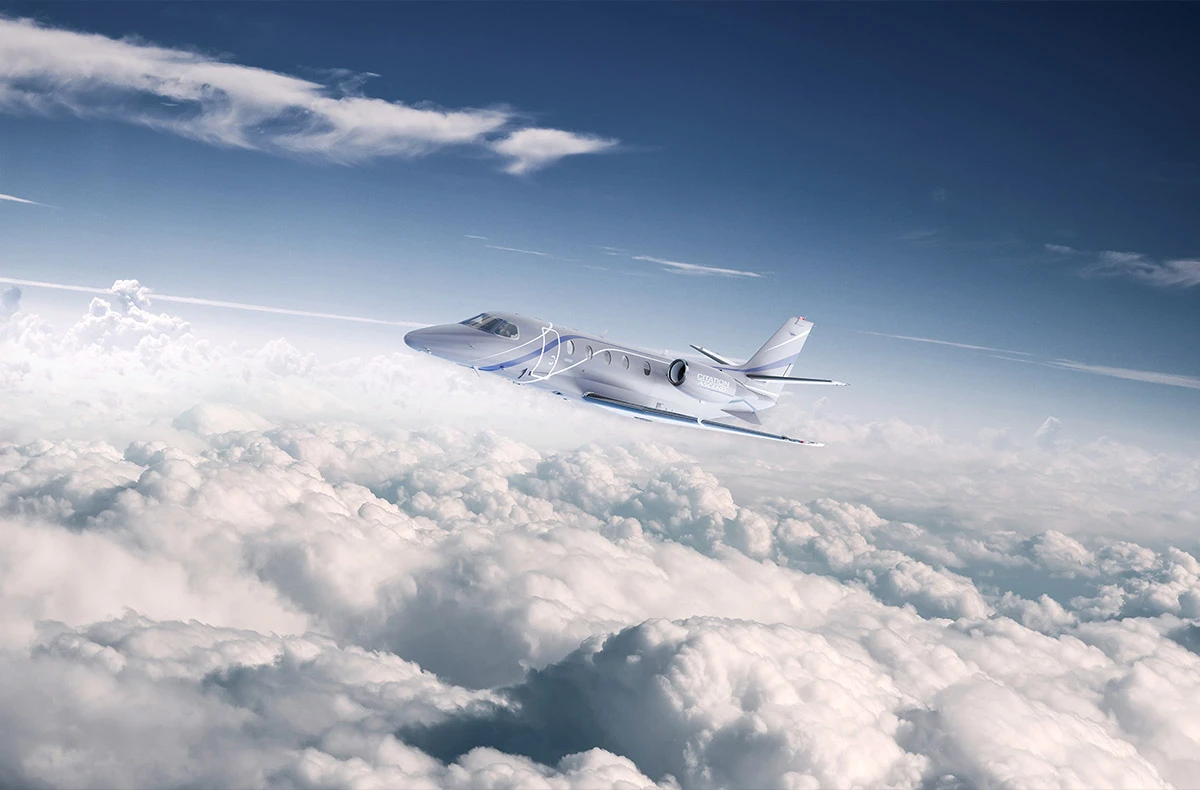
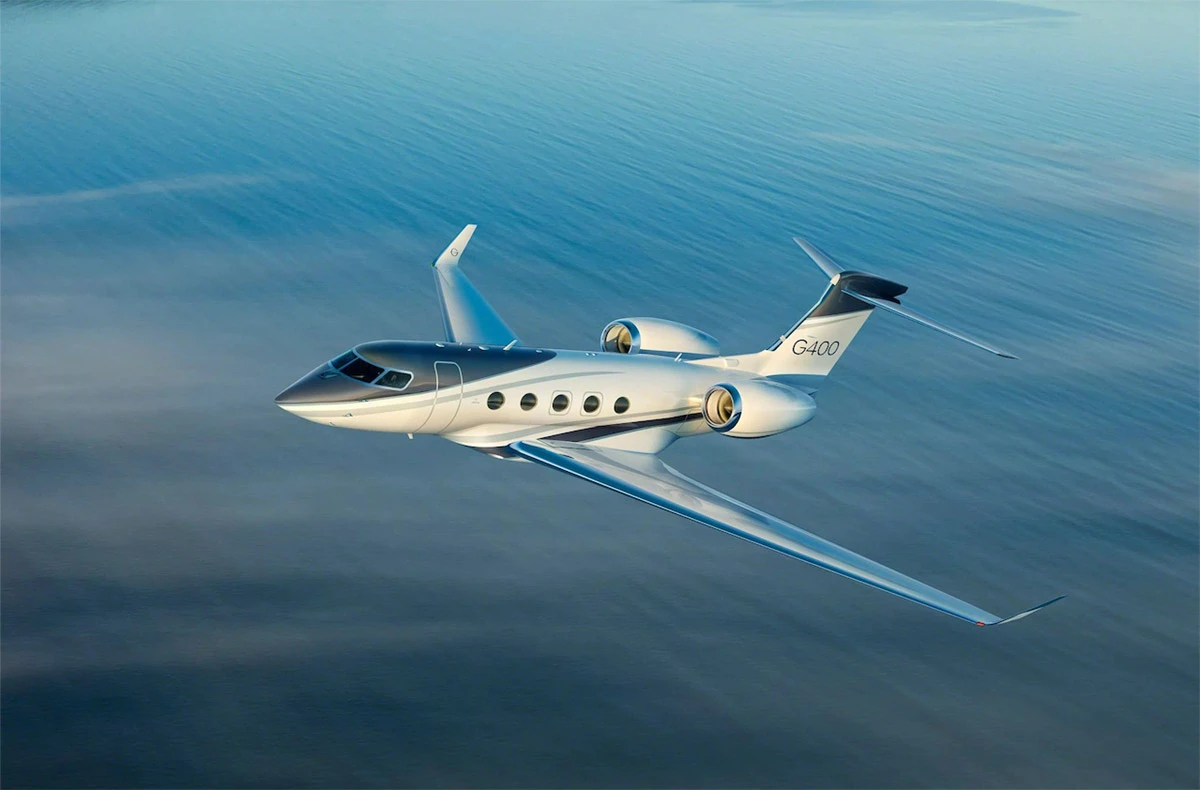
All three of the world’s fastest commercial aircraft are business jets. In second place behind the Global 8000 is the Cessna Citation X+, only a shade slower at Mach 0.93, while third place goes to the Gulfstream G700 at Mach 0.85. Big, fast business jets with a long range mark the upper end of the market. This segment is currently becoming much more important, with demand and usage both reaching record levels.
Investing in a business jet is worth it again
“Thanks to improved opportunities for tax depreciation under the current U.S. administration, investments in private jets have been significantly more attractive since 2025. Accordingly, demand has risen noticeably in both the new and used markets,” says Wolfgang Mattig, program manager for business jet engines at MTU Aero Engines. “But the overall market for business jets is still smaller than it was before the 2008 financial crisis. This is partly due to ongoing supply chain problems in the aftermath of the coronavirus pandemic.” Nevertheless, these aircraft are scarce and demand is greater than supply. In some cases, manufacturers can point to large order backlogs. “At the same time, used aircraft are available only in limited numbers—and this has the effect of stabilizing and pushing up the price level in this segment,” Mattig explains.
Business Jets
©bombardier
©Textron Aviation

©Dassault Aviation
©Gulfstream
©KeyLimeCS.com.305-494-6543
Flying at its best
Aviation journalist Andreas Spaeth recalls his flight in the Bombardier Global 7500 from Munich to the Dubai Air Show.
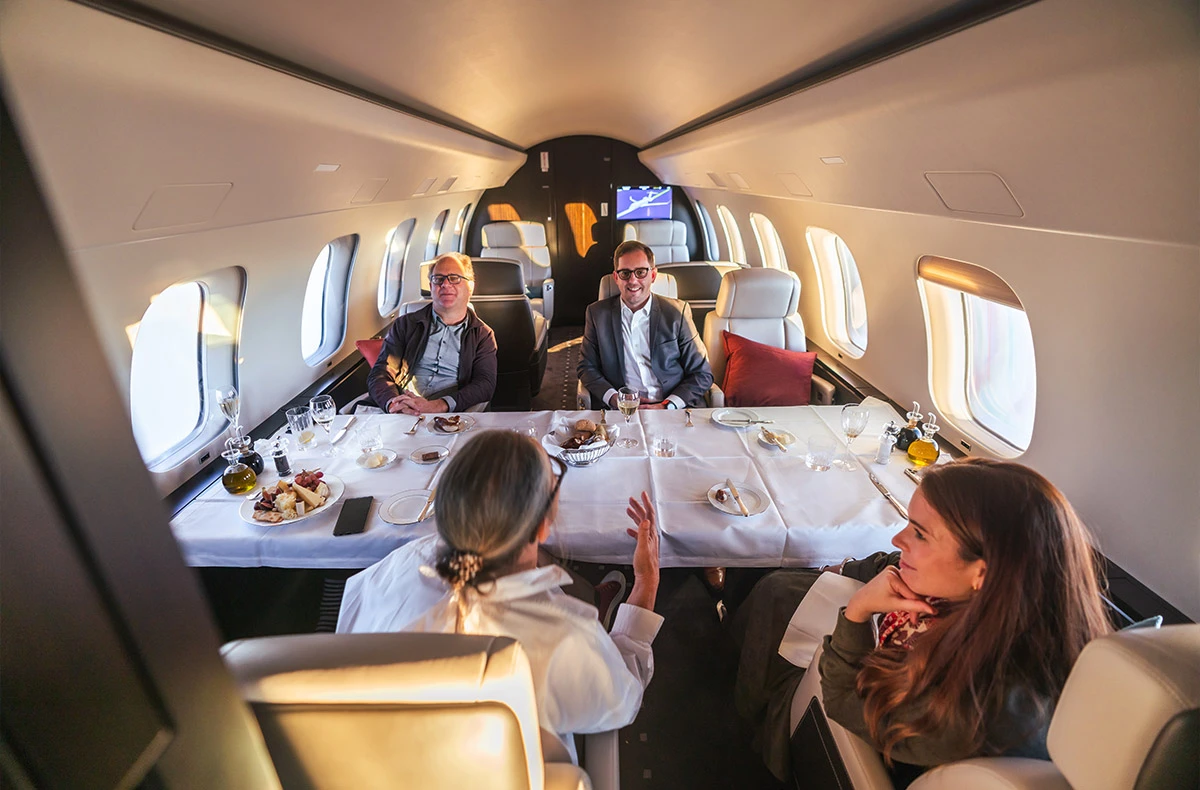
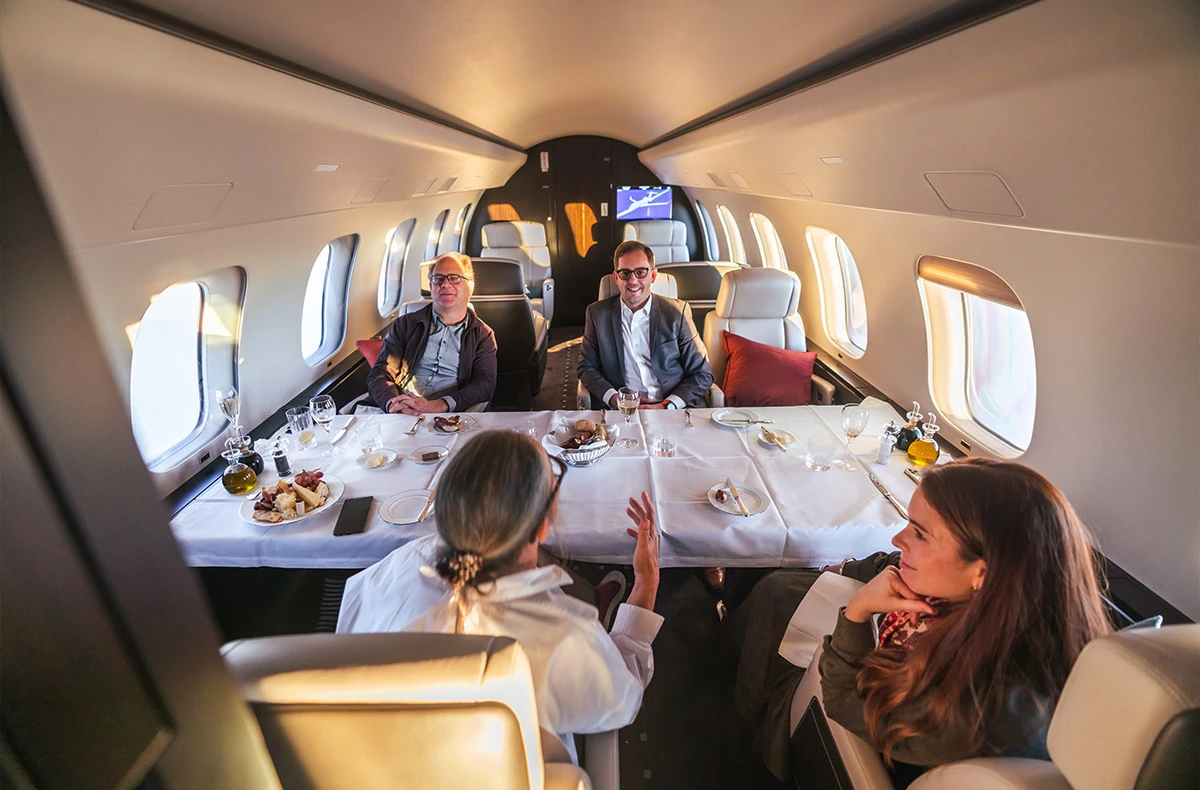
While the Global 7500 has room for a maximum of 14 passengers, today there are only four of us. Up to eight passengers can opt to lie down for the duration of the journey, and there’s even a spacious double bed in the rear cabin area. The focus is on relaxation and individuality—quite the opposite of what most people associate with air travel. Right from the steep and extremely quiet takeoff, the flight is a pleasure. There’s hardly a noise to be heard, and the aircraft’s large windows open up a panoramic view of the Alps. Our lunch proves to be an absolute feast thanks to our excellent flight attendants, among them a trained sommelier and a student of etiquette at a London butler school. The food is first-class, and so are the wines—which start at 200 euros a bottle.
“We’re deliberately flying a little slower today,” says Captain Dennis Voigt, “so you can enjoy the flight for longer.” The Global 7500 could easily cover the approximately 4,570 kilometers that separate Munich from Dubai in under five hours; in the end, our journey lasts a relaxed five hours and 18 minutes. No trouble at all for this business jet, which has a range of up to 14,300 kilometers (more than 16 hours of flight time).
After a gentle landing at Dubai World Central, I find a Rolls-Royce Ghost waiting right by the gangway. It takes just a few minutes to complete the formalities in the VIP terminal, and then it’s straight into the Rolls to go to the hotel. I could definitely get used to that.

©Spaeth
©Spaeth
©Spaeth
Demand for business jets is growing, but supply is scarce
Mattig’s colleague Fabian Thurner, who is responsible for analyzing the business jet market at MTU, cites another reason for the increased demand: “Since 2001, the number of high net worth individuals (people with investable assets of at least one million U.S. dollars–Ed.) has grown from around 7 million to some 23 million.” This group is the primary target clientele for business jets and its growth, coupled with the shortage of supply, is pushing up demand. MTU expects deliveries of private jets to increase by around four percent in each of the next three years—a much slower rate than for commercial aircraft with a center aisle, active fleets of which are expected to almost double over the next 20 years.
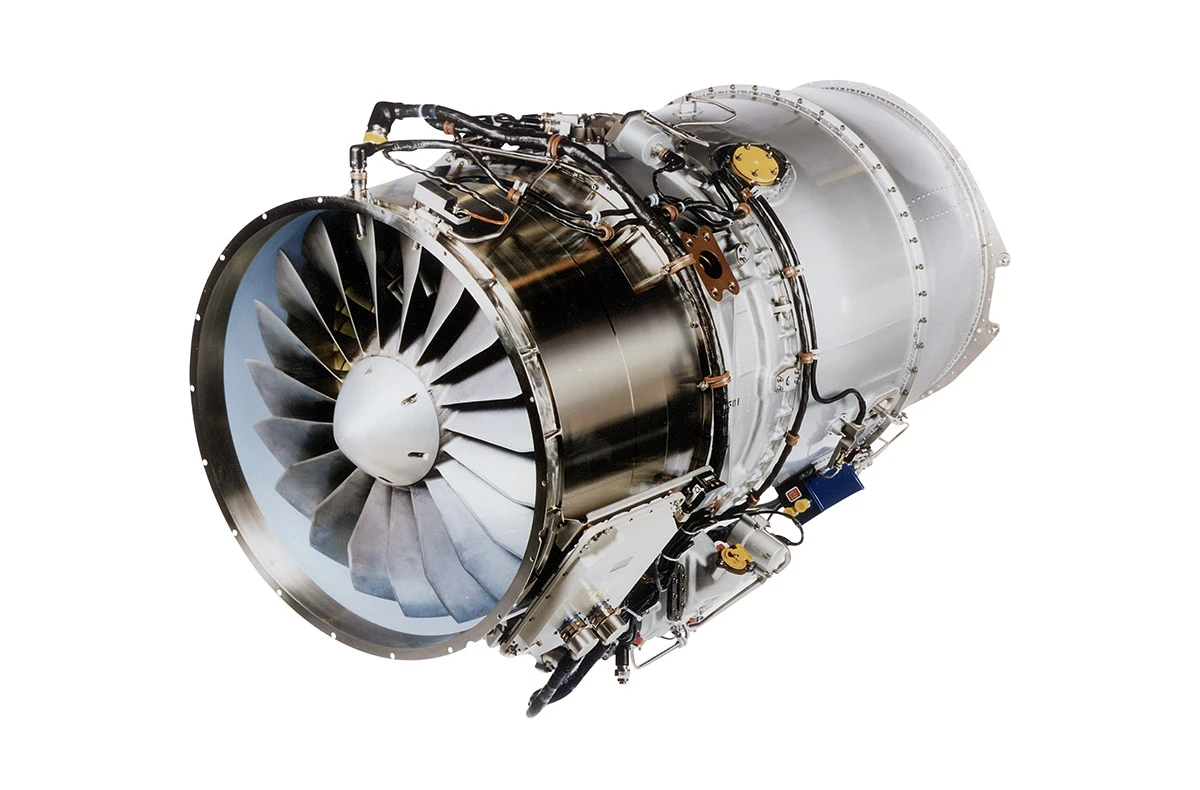
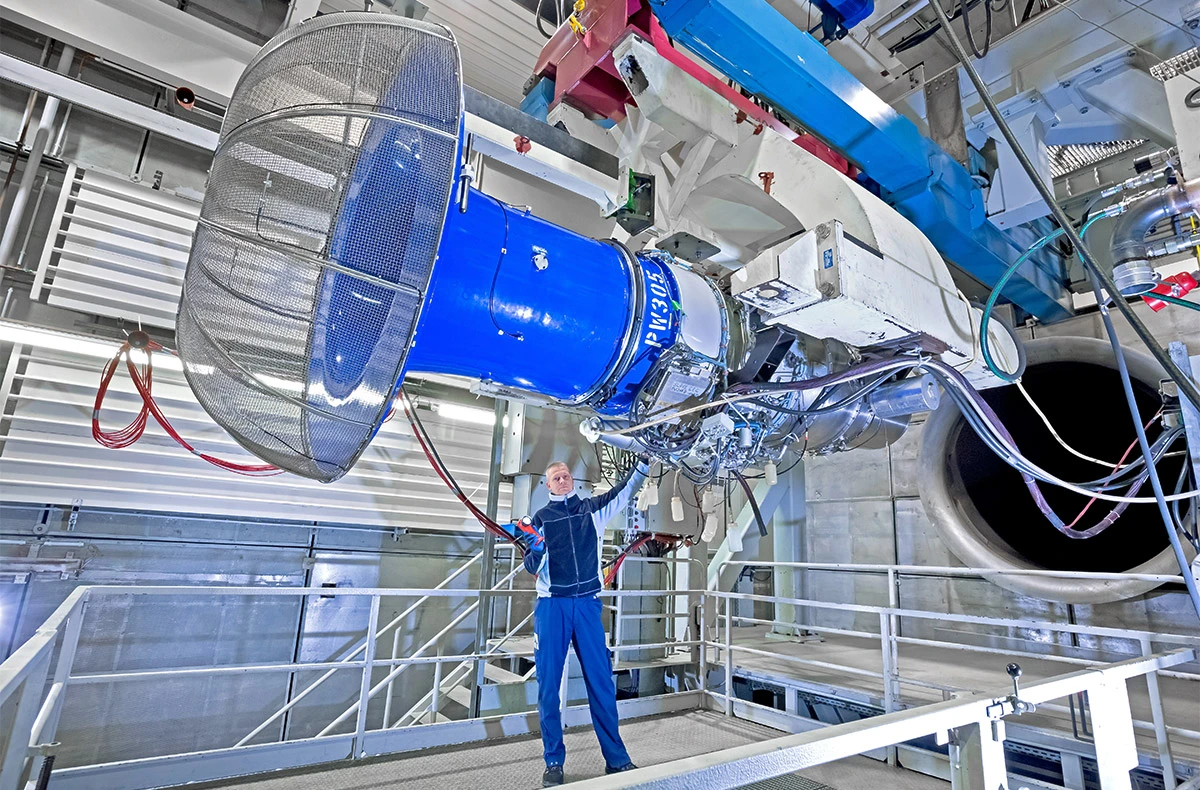
While there are only two to three major engine manufacturers for commercial passenger aircraft, there are five to six major suppliers competing for private jets. “This leads suppliers to focus more strongly on certain segments,” Thurner says. “MTU’s focus is on the medium/midsize segment and, with the PW800, on the large business jet segment.” Worldwide, the business jet market currently comprises almost 24,000 active aircraft. “And for 15 percent of them, MTU is involved in the engines,” Thurner says. “That’s a considerable share, and means we’re well positioned in this market segment.” Business jet modules account for around one-fifth of MTU’s annual production of components for commercial engines. To date, around 4,000 PW300 and PW500 engines have been delivered, along with around 1,000 PW800 engines.
Lower bypass ratios wanted
The demands placed on engines in business jets are quite different from those faced by engines in commercial passenger aircraft. “In the business jet sector, you need a lower bypass ratio than for commercial aircraft—meaning a smaller proportion of air flows around the engine core relative to the air passing through it. Business jets fly at higher altitudes and at higher speeds, so bypass ratios of 6:1 or 7:1 are ideal for providing the necessary thrust even when cruising. The climb rate is also better when the bypass ratio isn’t any higher than this,” Mattig says. “On top of that, having low-vibration engines is a much bigger priority for business jet customers than for the operators of scheduled flights.”
There’s also a clear difference in the intensity of operation. “A business jet usually notches up 300 to 500 flight hours each year,” Mattig says. A typical Airbus A320, on the other hand, is in the air for around 2,500 hours per year with three to eight flight segments daily. “Nonetheless, the engines’ service life requirements are the same in both instances—so you could say that the engines for business jets are ‘overengineered’ to a certain extent.”
Canadian connection
“Won’t fly” doesn’t apply to business jets
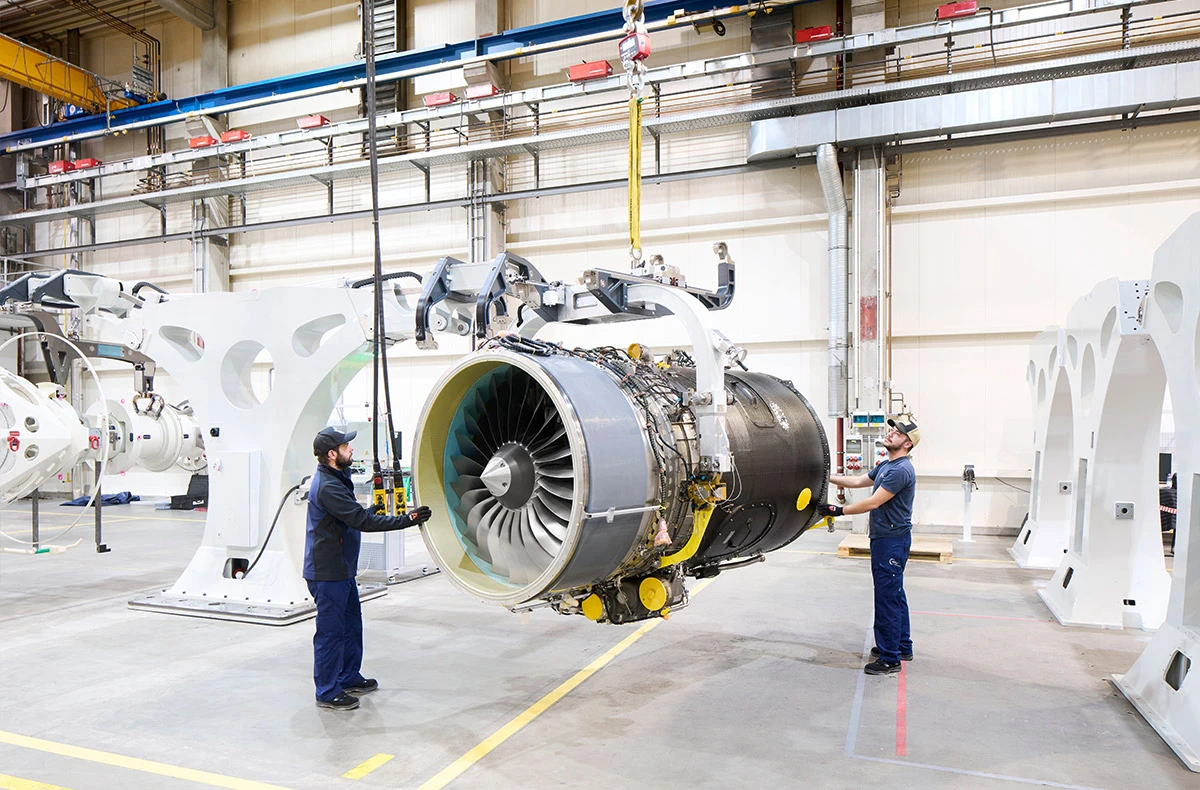
To suggest that business jet engines are merely modifications of existing commercial narrowbody programs is very wide of the mark. “The engines for the lower thrust classes aren’t slimmed-down versions of engines for bigger jets, but have been designed precisely for their thrust class,” Mattig says. “In the case of the PW800, where we also manufacture the forward stages of the compressor, the core engine for the Gulfstream G500 and G600 has the same design as the engine for the Airbus A220. We took technology from the larger engine and scaled it down.”
Mattig is aware of another key difference between airline customers and private jet owners. “Business jet operators and private individuals expect their aircraft to be ready for take-off at any time. In this respect, the customer is certainly king,” he says. MTU does everything it can to ensure these high expectations are met.