Braking calls for teamwork: air brakes, wheel brakes—and engines that suddenly work in the opposite direction.
More than just thrust – how engines brake
What would an aircraft do without engines? One thing’s for sure: It wouldn’t fly. But modern jet engines achieve far more than just propulsion. They brake during landing, supply the cabin with air and heat, generate electricity for the avionics, and drive hydraulic systems. In other words, they are the power backbone for flight operations—performing functions that are essential to safety, comfort, and efficiency. This installment deals with a very special ability: braking by reverse thrust.
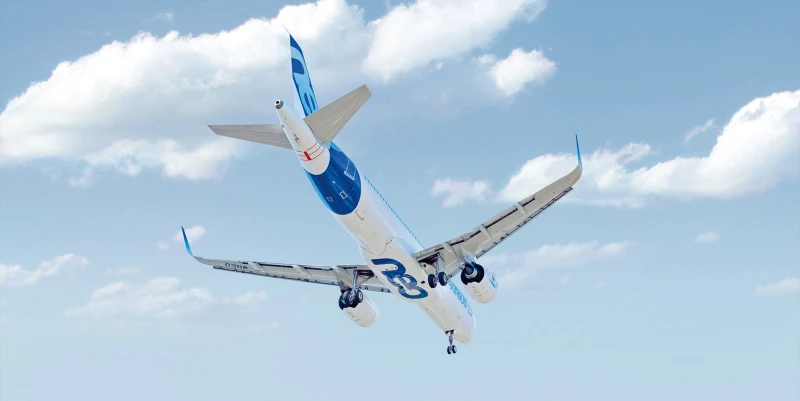
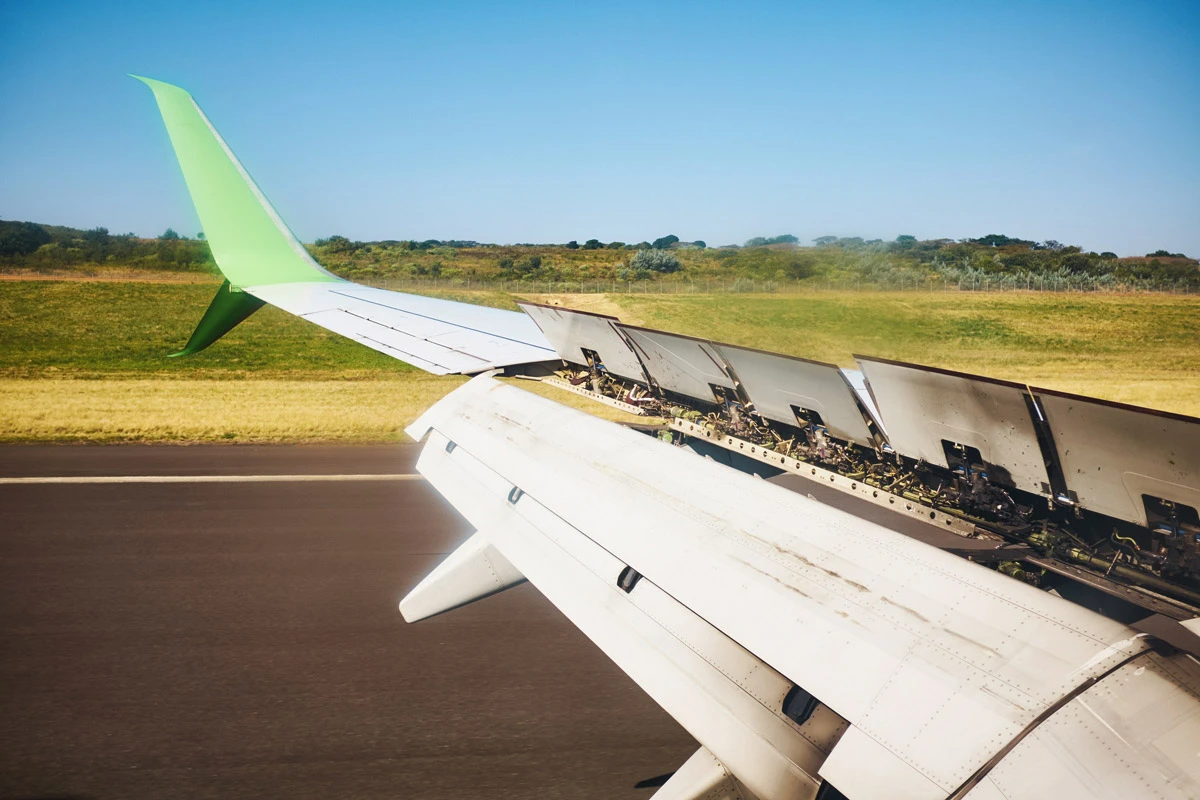
An Airbus A320neo’s typical landing speed is around 255 kilometers per hour (around 137 knots). Bringing the aircraft, with its maximum landing weight of almost 68 metric tons, safely to a halt calls for a great deal of braking force. As soon as the wheels touch the ground, the aircraft’s control system automatically activates the air brakes (spoilers) on the upper wing surfaces. Since drag increases in proportion to the square of the speed, the spoilers are particularly effective at high speeds. What’s more, they generate downforce to press the aircraft more firmly onto the runway—a key part of ensuring the wheel brakes can later achieve the best possible braking effect.
Reverse thrust—infinitely variable between “idle” and “full reverse”
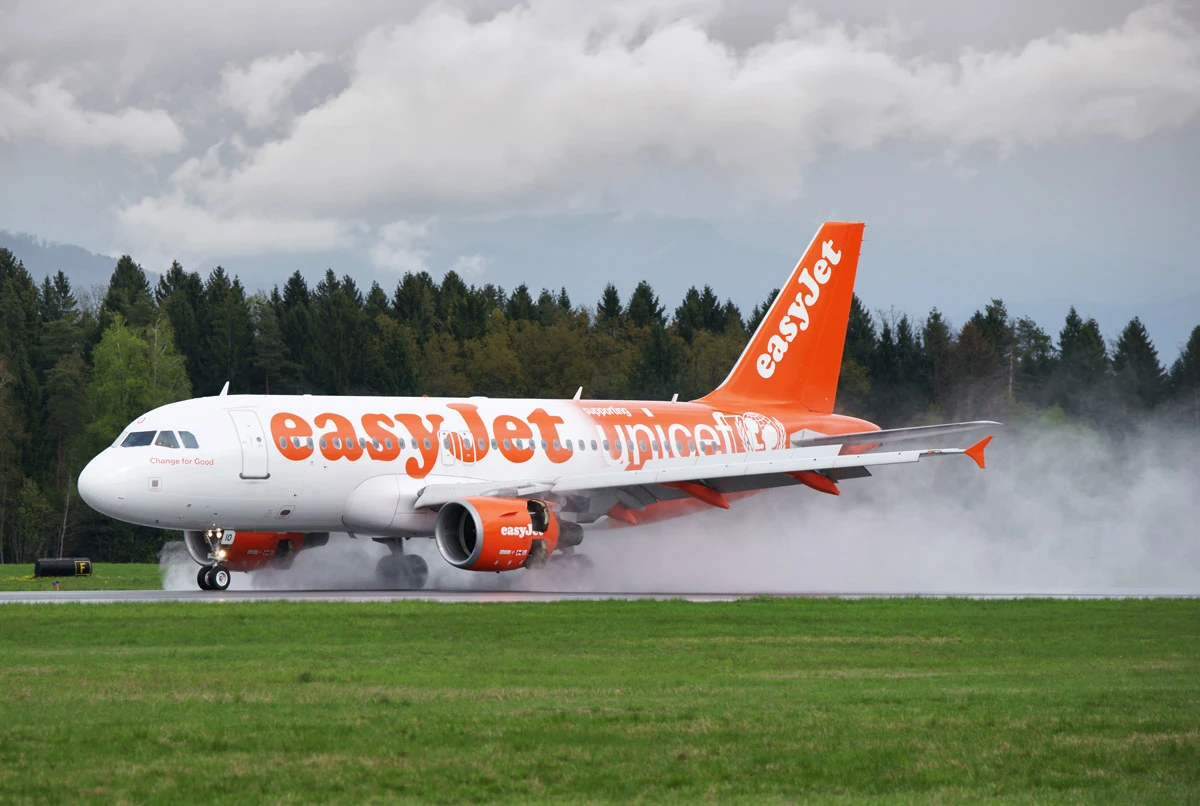
A few seconds after touchdown, the pilot pulls the thrust lever into reverse thrust. “That opens the flaps on the engine cowlings,” explains Christopher Simson, MTU engineer in predesign for commercial and military programs. “Depending on the engine type, this diverts up to 40 percent of the sheath flow in the opposite direction, creating additional braking force.” Pilots can vary the reverse thrust anywhere from “idle” to “full reverse,” depending on how much runway they have left. A similar principle works with turboprop engines: “The propeller blades can be adjusted,” Simson says, “such that they also generate reverse thrust and act as a brake.”
Wheel brakes can’t be allowed to overheat
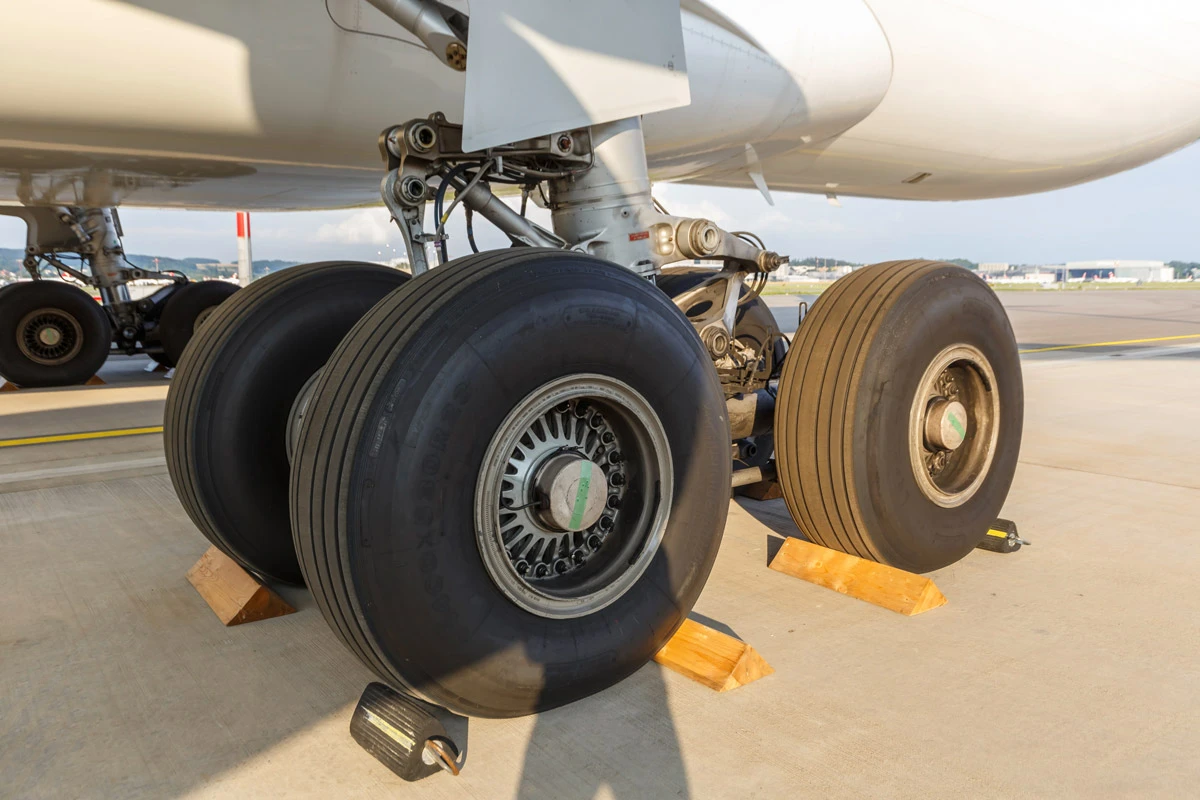
As the third step in this process, there’s the autobrake system, which engages the wheel brakes at their lowest setting, usually only at speeds below 185 kilometers per hour (around 100 knots). That’s because although the carbon fiber materials used can easily withstand temperatures of several hundred degrees Celsius, excessive heat reduces braking performance and means that the brakes take longer to cool down. This can be critical, especially if the turnaround time at the gate is short, as a maximum permissible brake temperature applies for the next takeoff: Should that takeoff be aborted, the brakes must be able to reliably handle the aircraft’s entire stopping distance.
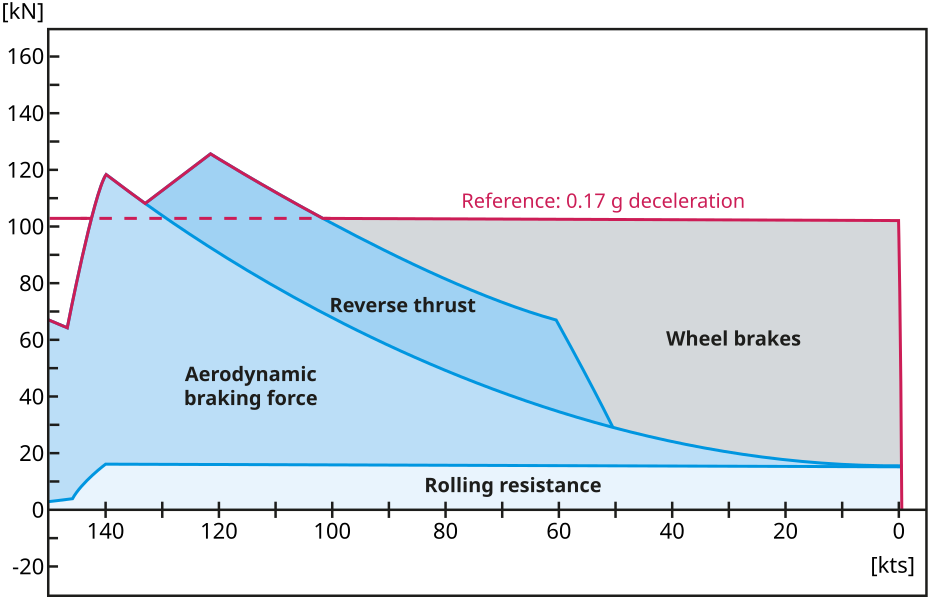
The chart shows how the braking forces of a commercial aircraft are distributed during landing as a function of speed. The total braking force results from aerody-namic drag, reverse thrust, rolling resistance, and wheel brakes; a reference line indicates the braking force required for a deceleration of 0.17 g. At high speeds, aerodynamic effects such as drag and spoilers dominate, followed by additional braking from reverse thrust. At lower speeds, the wheel brakes increasingly take over until the aircraft comes to a stop.
Pushback with reverse thrust
A look at the aviation history books shows that reverse thrust hasn’t always been used only for braking. In the 1960s and early 1970s, U.S. airlines in particular used it to save on airport pushback fees. Back then, aircraft would activate reverse thrust to roll backward from the gate under their own power. However, this practice was discontinued after the 1973 oil crisis caused kerosene prices to rise, as it was simply no longer economical.

A380: Only the inside engines offer reverse thrust
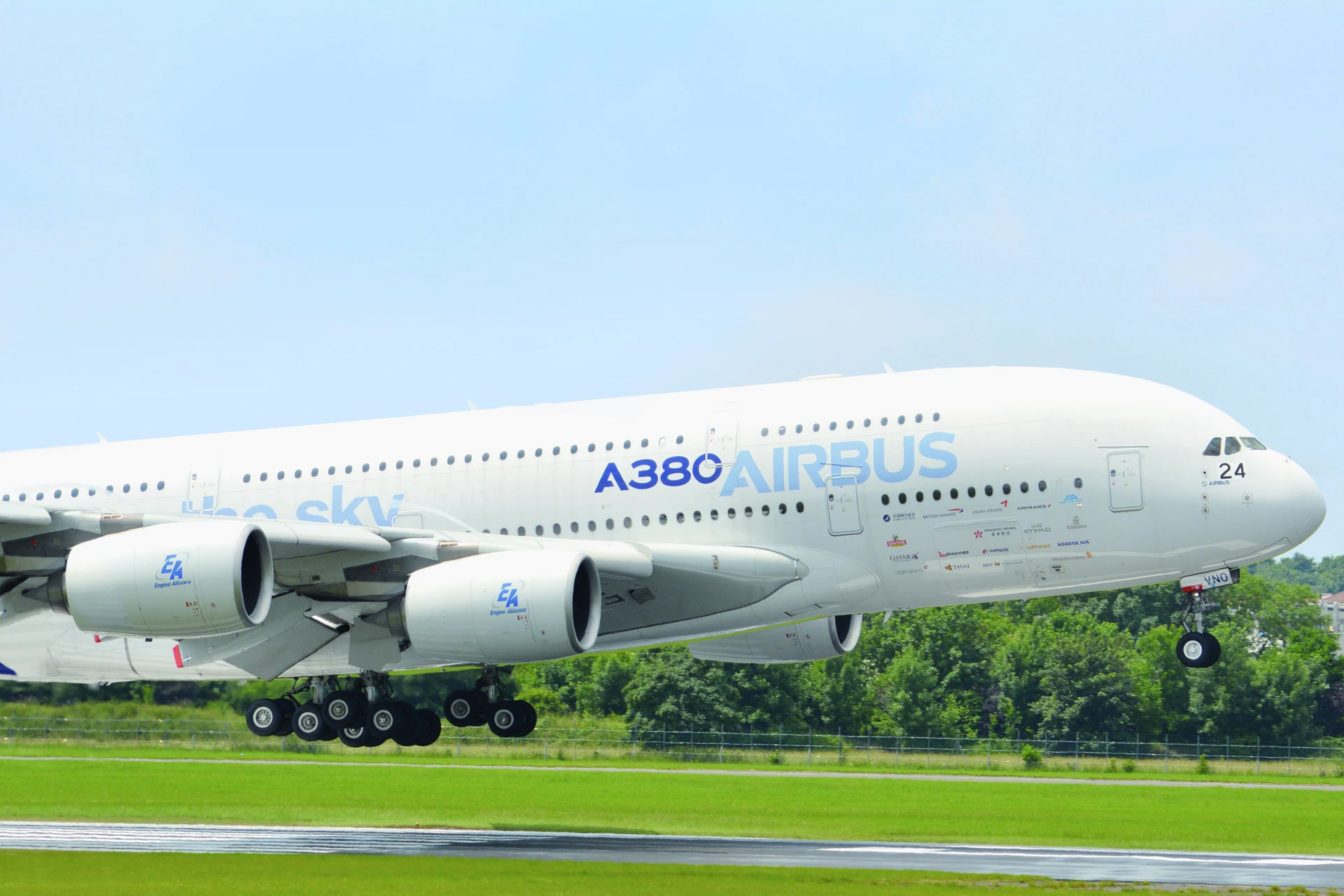
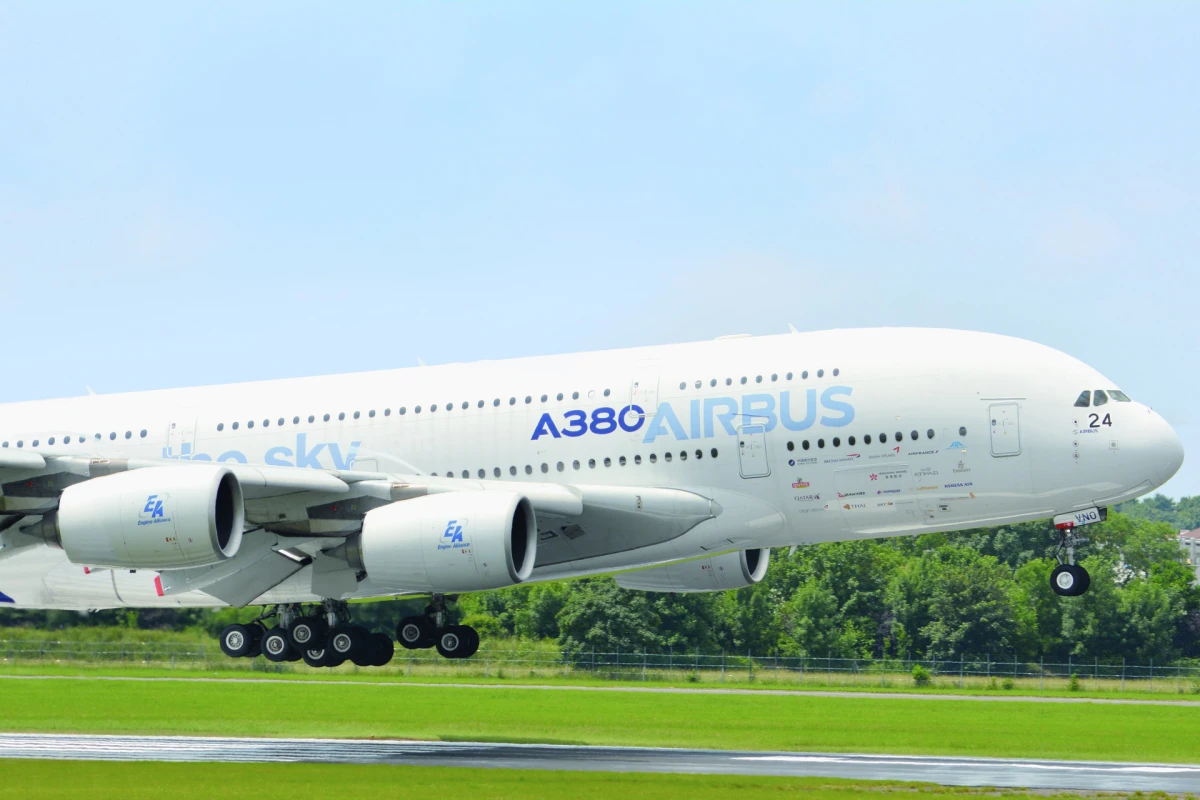
There’s something special about the Airbus A380: Only two of its four engines have thrust reversers. Why? The superjumbo has a wingspan of around 80 meters, so its outer engines are already beyond the edge of the paved runway—which puts them directly over the grass verge. Using reverse thrust there might whip up foreign bodies that could endanger following aircraft. A positive side effect of this is that dispensing with the additional flaps saves weight on the outer engines. That’s why only the two inner engines are taken into account when calculating the A380’s braking distance.