Engines don’t just provide thrust; they also power the hydraulics. These control the rudder, landing gear, and flaps—with redundancy that ensures maximum safety.
More than just thrust – how engines control hydraulics
- More than just thrust – how engines brake
- More than just thrust – how engines ensure cabin comfort
- More than just thrust – how engines provide electricity
- More than just thrust – how engines control hydraulics
What would an aircraft do without engines? One thing’s for sure: It wouldn’t fly. But modern jet engines achieve far more than just propulsion. They brake during landing, supply the cabin with air and heat, generate electricity for the avionics, and drive hydraulic systems. In other words, they are the power backbone for flight operations—performing functions that are essential to safety, comfort, and efficiency. This installment looks at how engines power the hydraulic systems—thereby ensuring control of the aircraft.
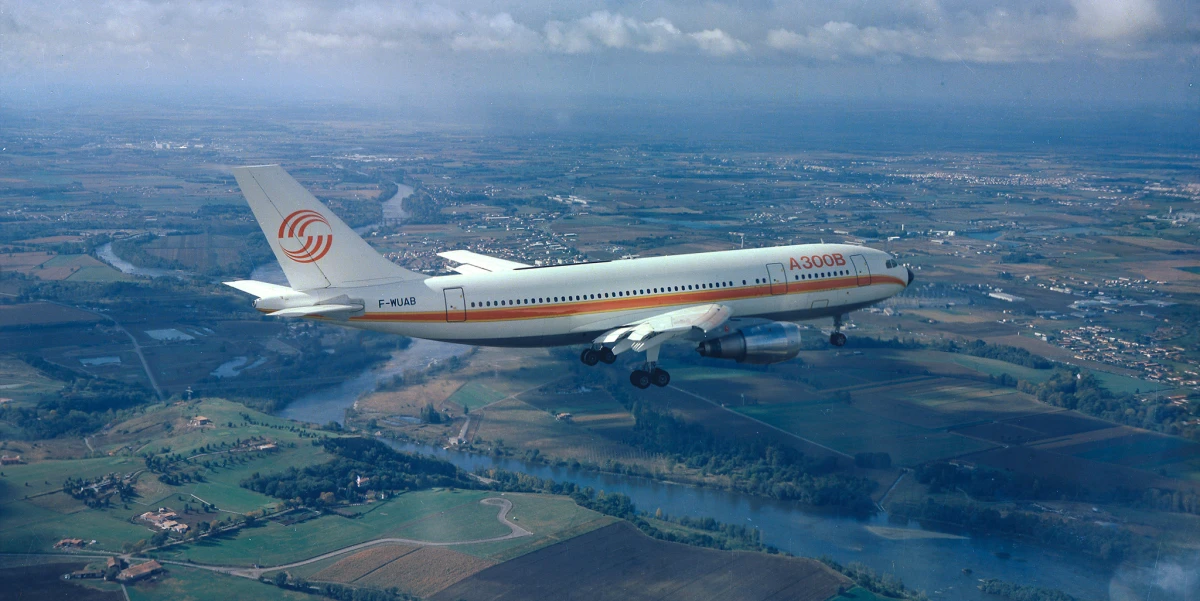
In May 1974, Air France put the first Airbus A300 into service. At the time, this was the world’s safest passenger aircraft, thanks to the hydraulic systems on board. Previously, pilots had operated control surfaces such as ailerons, elevators, and rudders by moving them directly using cables, rods, and pulleys. This was problematic in terms of safety, because it made it difficult to implement power transmission and redundancy. Today, it’s impossible to imagine modern commercial aircraft without hydraulics. In addition to flight control, these systems perform tasks such as braking, thrust reversal, and—on the ground—opening and closing the cargo doors.
Most commercial aircraft fly with two hydraulic systems on board, each of which is pressurized by the engines. Meanwhile, a third or even fourth circuit is driven by an electric pump, which in turn is powered by an engine-driven generator or a battery. If one circuit fails, the remaining circuits automatically take over all functions. A power transfer unit (PTU) can also be used to move power between the circuits—with no exchange of hydraulic fluid. This means that even if two circuits fail, the power of the third is sufficient to keep the aircraft under control.
In an emergency, the ram air turbine (RAT) kicks in
According to Liebherr Aerospace, the pressure in a single-aisle aircraft’s hydraulic systems is around 3,000 psi (pounds per square inch); this corresponds to 200 times the air pressure at sea level, or the pressure of a two-kilometer-high water column. In widebody aircraft, the pressure now tends to be 5,000 psi.
The ram air turbine (RAT) provides additional safety: Its fold-out propeller mechanically drives a pump that delivers hydraulic fluid under high pressure into the system. Although the RAT can’t match an engine-driven pump, the pressure it generates is sufficient to operate the most important control surfaces such as the rudder, flaps, and landing gear in an emergency. By this time, the pilots will have long since initiated an emergency landing at the nearest airport.