In Malaysia, MTU Maintenance recently carried out one of its largest on-site service assignments for an airline to date.
On-site engine repair: MTU in action in Malaysia
Brief Summary
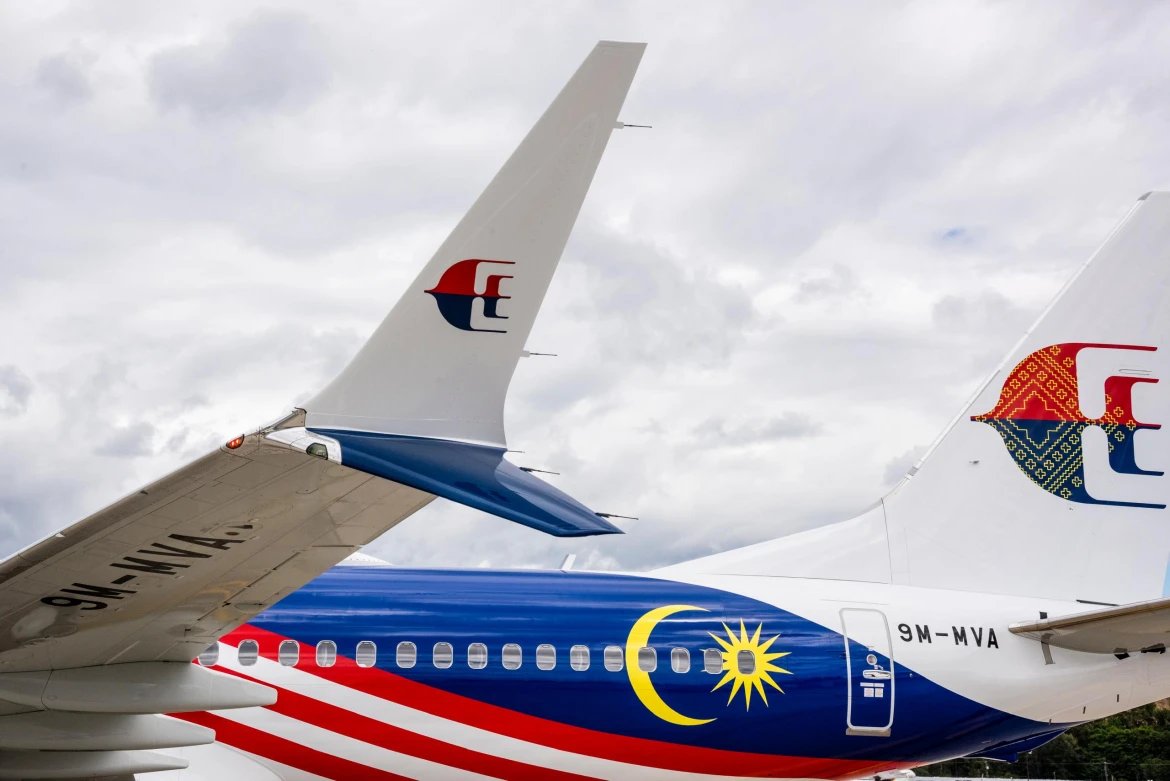
When Malaysia Airlines needed to replace high-pressure turbine blades on 25 CFM56-7B engines at short notice, MTU Maintenance developed a tailored on-site service solution within a remarkably short time. Instead of sending the engines to the shop, MTU experts carried out the work directly on site, enabled by a globally connected on-site service network and seamlessly coordinated processes.
Rain is pounding down on the roof of the hangar in a far corner of Kuala Lumpur International Airport. Outside, it’s a tropical 32 degrees; inside, the clock is ticking. A team of on-site service (OSS) mechanics from MTU Maintenance is disassembling a CFM56-7B engine belonging to Malaysia Airlines. They’ve already removed the low-pressure turbine (LPT), and now the specialists are working their way step by step toward the high-pressure turbine (HPT), which needs its blades replaced—as soon as possible. And every hour counts.
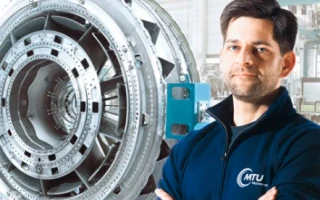
“Time is money, especially in aviation,” says Tom-Patrick Naurath, an aircraft maintenance engineer specializing in engine technology on the OSS team at MTU Maintenance in Ludwigsfelde. “The airline wants to get its aircraft back in service as soon as possible. That’s when we, as on-site service teams, come into play.”
This project, which began in the spring of 2025, was the first of its kind on this scale for MTU Maintenance’s global OSS business. The shop visits that had originally been planned were quickly converted into a customized on-site solution, significantly reducing the time required. In just six months, MTU experts replaced a total of 25 CFM56-7B engines with new HPT blades as well as performing additional work. OSS specialists from MTU’s sites in Ludwigsfelde, Germany, Perth, Australia, and São Paulo, Brazil, worked together on a rotating basis—two to three engines per assignment and team. In total, more than twenty mechanics and inspectors were involved. But how does an operation that’s so logistically complex actually work?
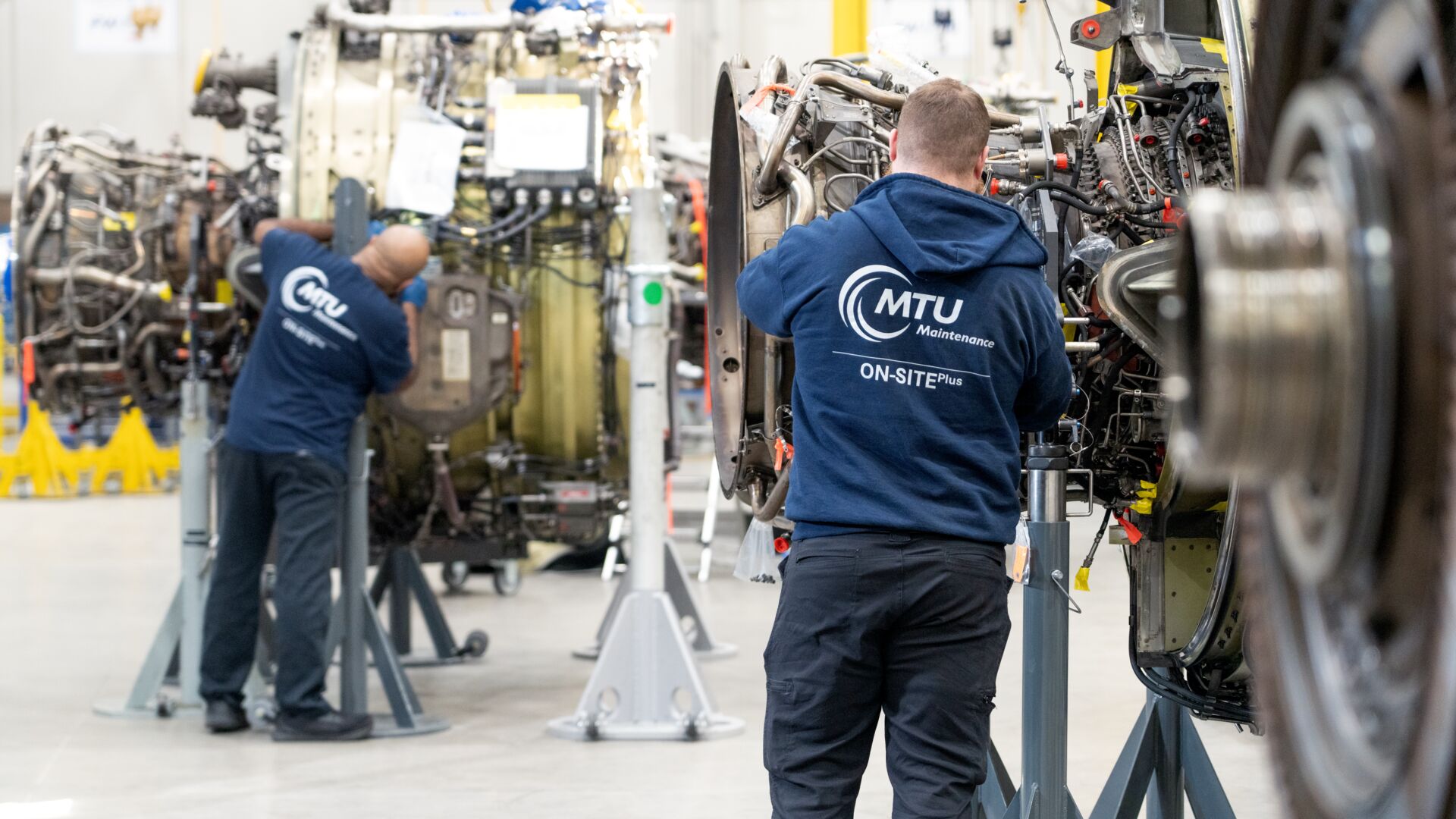
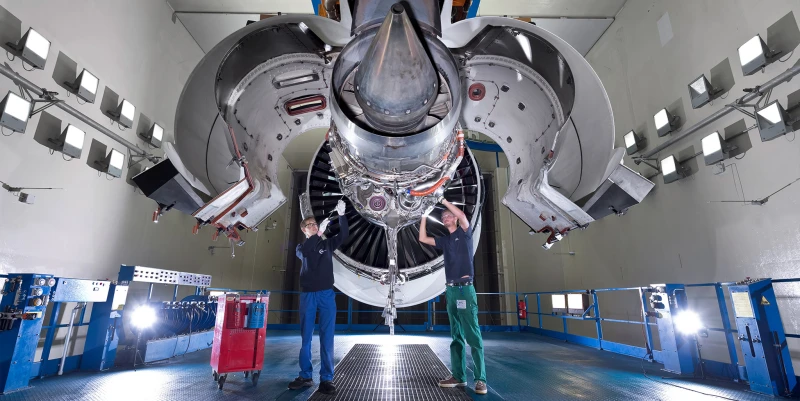
Ready for the next mission: MTU Maintenance’s On-Site Service team supports customers around the world.
Every detail has to be just right
A customer request set the ball rolling. At the MTU on-site service headquarters in Ludwigsfelde, the team immediately started preparing for this major assignment in order to support the customer on-site as quickly as possible. Saurabh Pagare, Customer Account Manager at MTU Maintenance Berlin-Brandenburg, knows that the only way to successfully complete a project like this is through precise planning and coordination between the customer, the engine manufacturer, and MTU’s OSS team.
“The airline couldn’t ground all its aircraft at the same time to have the engines taken apart,” he says. Flight operations had to continue—especially during the summer months, when passenger numbers are high. And the manufacturer had to be able to supply the spare parts—in this case, HPT blades. “Meanwhile, we at MTU had to plan the necessary personnel, materials, and tools with great precision.”
Naurath and his colleagues on the OSS team also started getting ready for the assignment themselves by organizing flights, visas, tool lists, customs documents, and air freight. That’s because a mission of this kind involves not only highly qualified personnel flying halfway around the world, but also literally tons of specialized equipment. “We ask ourselves a series of questions: What equipment do we need? Which oils or lubricants? What special tools and which spare parts?” Naurath says. “Some of the boxes we pack are up to 1.8 meters by 2.0 meters in size. And because we ship everything as air freight, every detail has to be just right.”
Working closely with Malaysia Airlines Engineering and MAB Engineering Services, the OSS experts developed a tightly scheduled six-month plan for the on-site assignment. The OSS teams’ deployments were staggered: As a rule, they would repair and reinstall one engine on the wing before moving on to the next.
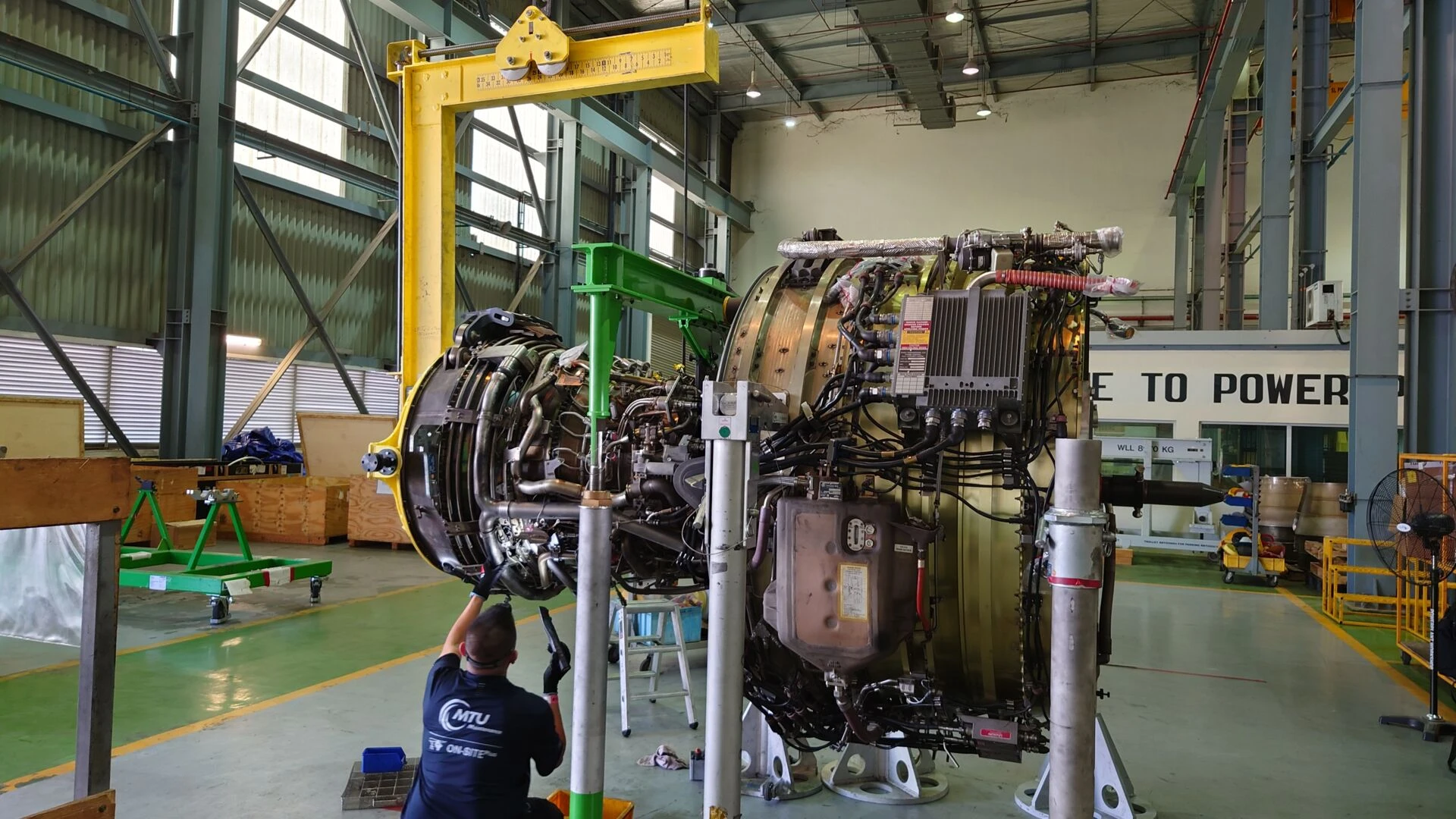

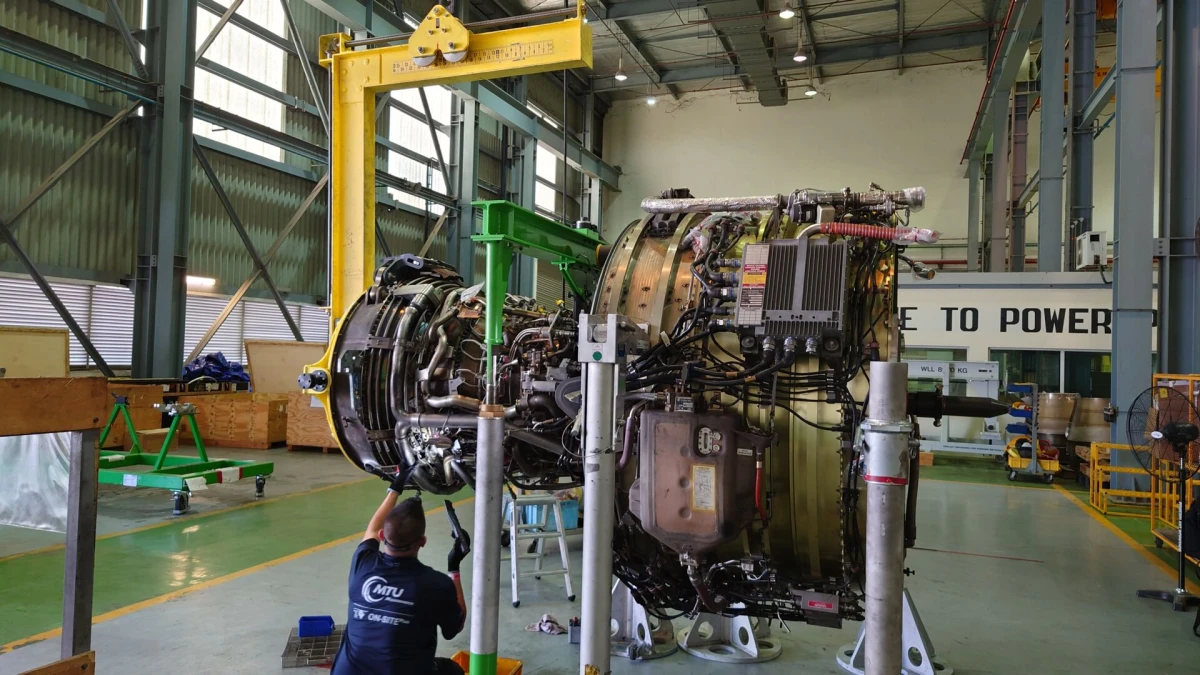
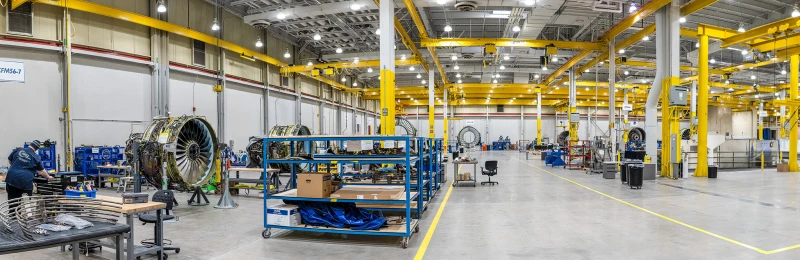
Every move counts: On-Site Service teams worked on a total of 25 CFM56-7B engines at Malaysia Airlines’ facilities.
Boroscopy
During boroscopy, the interior of an engine is examined using a borescope, a slim probe equipped with a camera and lighting that is inserted into the engine through existing openings. This allows technicians to inspect hard-to-reach areas without disassembling the engine.
Precision work in the hangar
A team of mechanics from the airline handled the key preparations. They used a borescope to inspect the engines while still mounted on the wing. The imagery was then also reviewed by MTU specialists. “These images let us assess the condition of the engine in the areas that can be inspected with the borescope,” Naurath says. “If any issues are spotted, we can get the necessary tools and spare parts ready before we fly out to the customer.”
It was in the hangar in Kuala Lumpur that the real work began for Naurath and his team—the work that keeps them traveling around the world for up to 150 days a year.
At MAB Engineering Services’ facilities in Sepang, MTU specialists worked alongside the airline’s technical teams to carry out the extensive engine work. The local team’s knowledge of the aircraft and hangar environment complemented MTU’s specialised OSS expertise, allowing the work to be completed on site efficiently and safely.
On-site repairs offer several advantages: They avoid additional shop visits, reduce downtime, and thus maximize fleet availability. “Whatever our teams of specialists can repair on-site, they will,” Pagare says. “Ultimately, we want to give our customers a flight-ready engine as quickly as possible and to the required quality standards.”
In Kuala Lumpur, the OSS team usually consisted of four engine specialists: three mechanics and an expert from Certifying Staff, who approves the work in accordance with applicable standards. Several OSS teams took turns during the campaign, just like in a relay race. “Sometimes we even ran into each other at the airport,” Naurath recalls. “One team would be flying home while another was just arriving.”
You may also be interested in:
A global network in action
Another thing that set this campaign apart was global collaboration. OSS teams made up of MTU engine experts from three continents worked hand in hand. “Our customers expect fast and reliable support, no matter where in the world their engine is located. That’s exactly why we’ve built our global on-site service network,” explains Xaver Schmid, Vice President Global On-Site Services at MTU.
To ensure efficient coordination of such operations worldwide, MTU’s core on-site service processes have been globally standardized and digitally integrated. As soon as a customer inquiry is received, all relevant data—such as the customer, engine type, serial number, nature of the damage, and location—is centrally recorded and used for further operational planning. Logistics processes also dovetail seamlessly: Spare parts are readied, special tools are organized (including shipping and customs), and response teams are assembled. “For our customers, this global networking means one thing above all else: faster response times, maximum flexibility, and access to our worldwide network of experts. It allows us to provide the right solution, and with MTU quality, regardless of the location,” Schmid says.
As the campaign continued, the processes became increasingly efficient. The Malaysia Airlines team and the MTU specialists worked together like a well-oiled machine. “Everyone knew what to do and when to do it—without having to ask twice,” Naurath recalls. Pagare continues: “The most valuable thing we offer our customers is time. In the end, every engine that was repaired on-site was back in service within about ten days.”
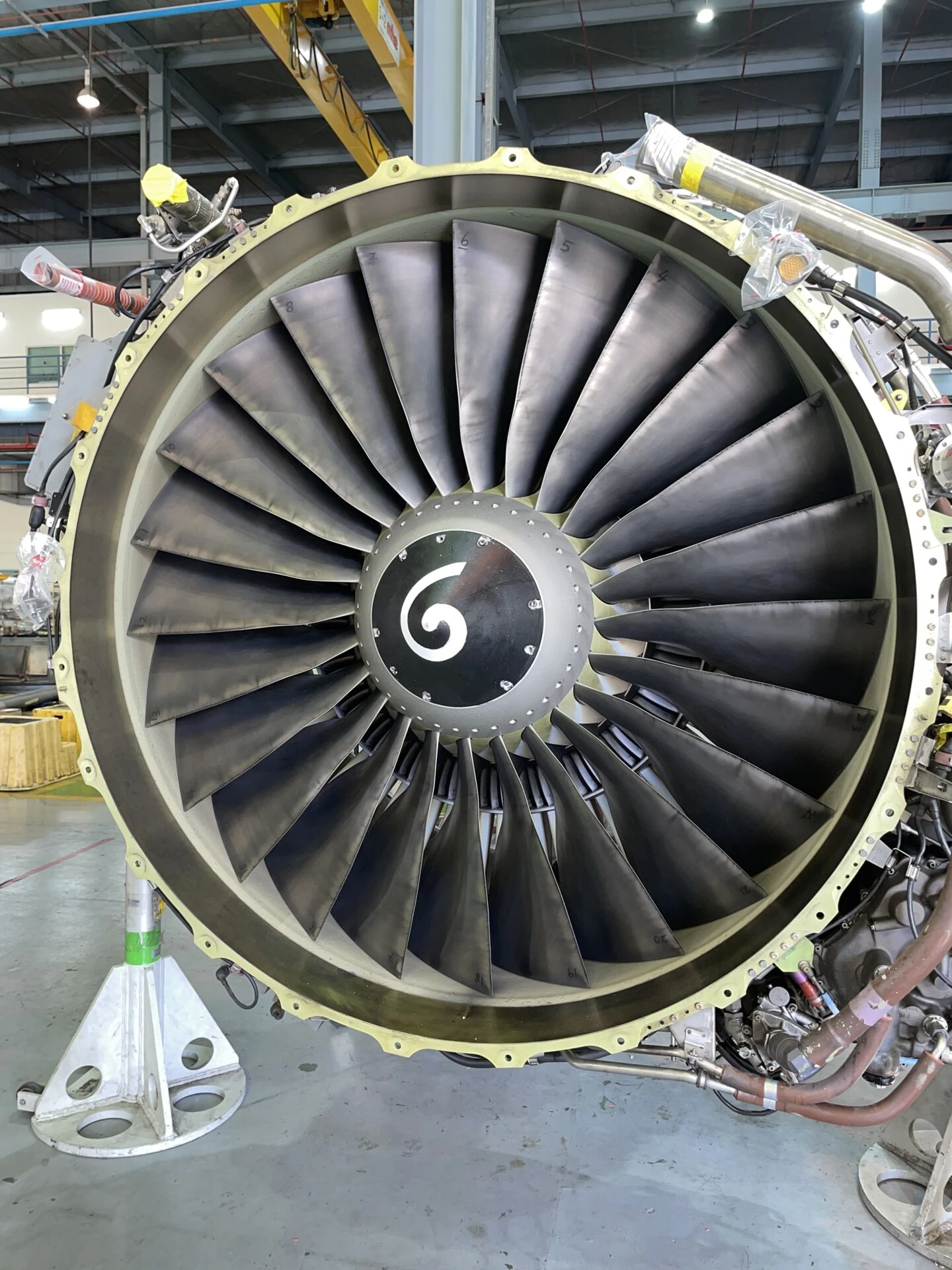
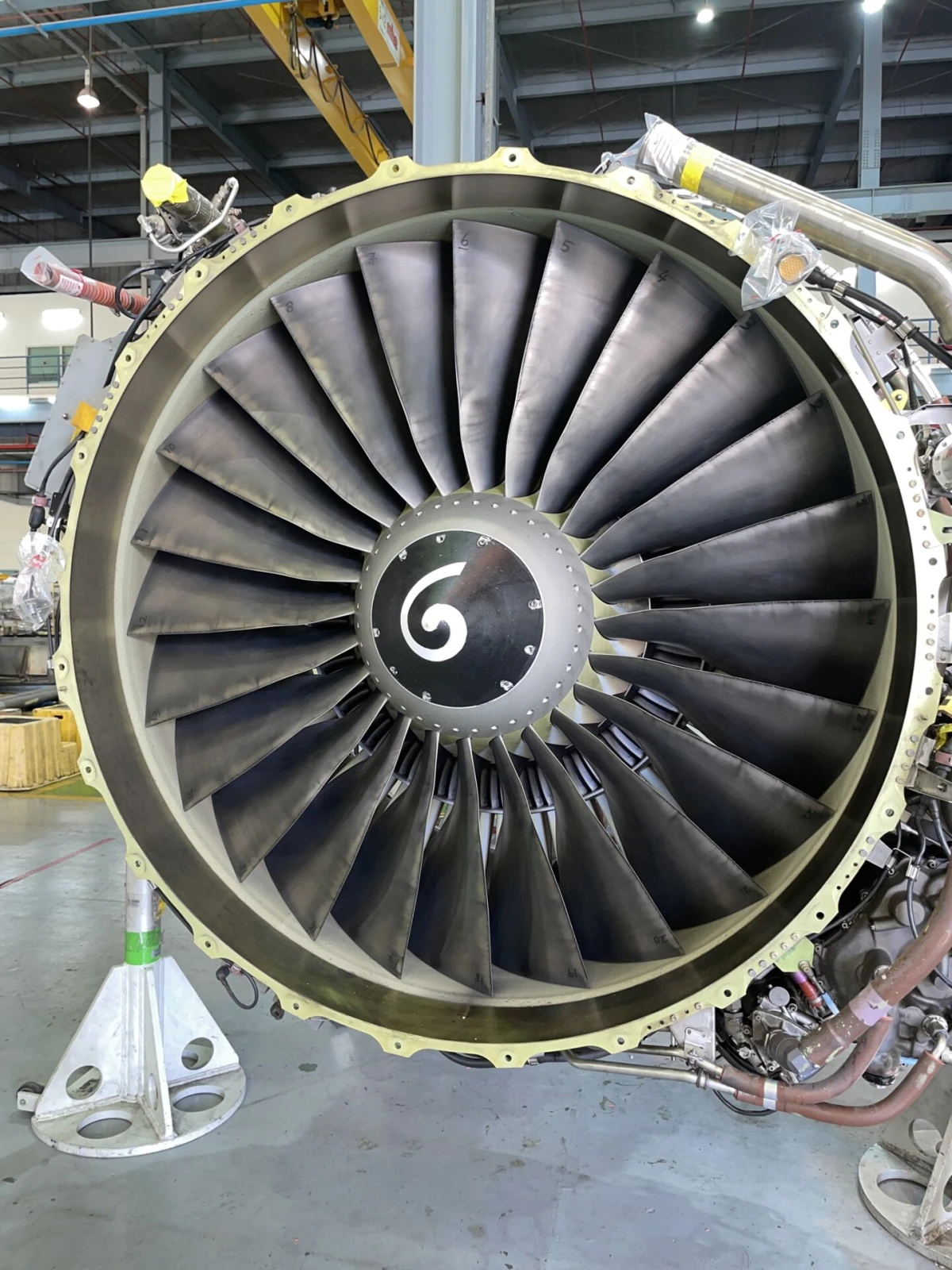
Two engines become one: Thanks to technical expertise and close coordination, the On-Site Service team found a solution that helped avoid additional downtime.
Two engines become one
No matter how perfect the planning may be, surprises are part and parcel of the OSS business. “At the end of the day, you never know exactly what to expect during a mission,” Naurath says. “Unplanned repairs and additional orders, known as ‘workscopes,’ can always arise.” Some damage isn’t visible until the engine is disassembled.
And this campaign also experienced precisely that kind of moment: While disassembling two of the engines, the OSS teams discovered that additional repairs were needed—to the low-pressure turbine in one engine and to the rotor of the high-pressure turbine in the other engine. Normally, both engines would have been sent to the MTU Maintenance shop, since the repairs were too complex for an on-site assignment.
But for the airline, having two engines out of action for a longer period would have been a major setback resulting in longer downtime and additional costs. “That’s not the kind of news a customer wants to hear,” Naurath says. “But our job also includes finding a solution in difficult situations like this—quickly and on-site.”
They came up with the idea of combining the undamaged modules from both engines to build a single fully operational engine. “This demonstrates how flexible our on-site service is, and how MTU’s customers benefit,” Pagare says. After consulting with the OSS team, the solution was put to the customer. “Our experts have the technical know-how, experience, and necessary tact, both when it comes to the engine and in dealing with customers.”
After a detailed technical assessment the customer thought it was a great idea, so additional tools were flown in to enable the MTU specialists to work on both engines simultaneously—which also saved time. Coordination between the airline’s engine manager, the OSS team in Kuala Lumpur, and the customer account manager at MTU in Ludwigsfelde was ongoing around the clock. “We made good use of the time difference,” Pagare says. “We aimed to get an answer to the customer’s every question ready by the next morning.”