The Boeing twinjet has dominated air traffic like no other aircraft since its beginnings in 1968. And it’s poised to do so far into the future, in wave after wave of new versions.
The Boeing 737: How a simple jet revolutionized aviation
- Boeing 747: Queen of the Skies
- The Boeing 737: How a simple jet revolutionized aviation
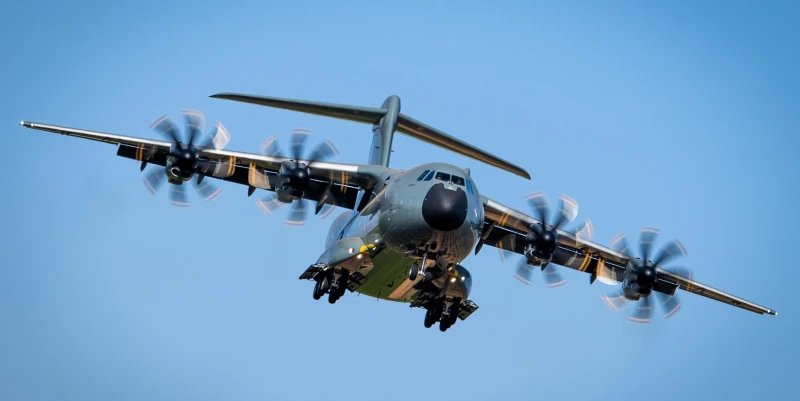
- Airbus A400M – modern military transporter and all-around talent
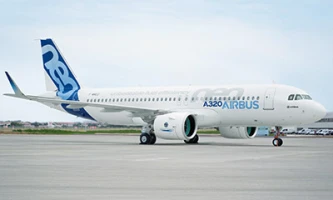
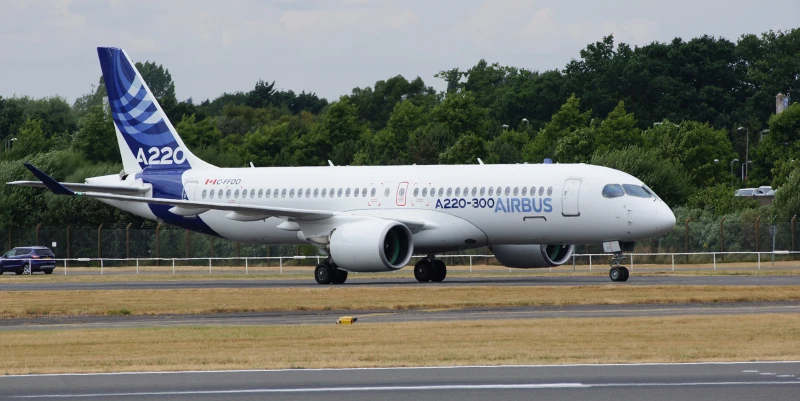
- Airbus A220 – The innovative medium-haul jet from Canada
- Boeing 777X – the largest twin-engine jet in the world
- Airbus A321XLR: A new chapter for aviation
- The Airbus A380 – the world’s largest passenger aircraft
- Airbus A319 – a small aircraft for a wide range of tasks
- Airbus A320 – a medium-haul bestseller for almost 40 years
- Embraer E-Jet E2 – A game changer for regional routes
The Boeing 737 was originally developed to bring the comfort of jets to smaller cities for the first time, in keeping with the tradition of Boeing’s larger 707 and 727 models, which had previously set this standard. This new addition to the range, then still a small aircraft with space for up to 82 passengers, celebrated its premiere in 1967. In terms of form and function, it was designed largely according to Lufthansa’s wishes—a first in the history of commercial aviation. Never before had a major U.S. manufacturer developed a new jet model not at the request of a U.S. airline but according to the specifications of a foreign customer. Quite the coup, because less than ten years after Lufthansa resumed flight operations in 1955, here was the German flag carrier essentially telling the world’s largest aircraft manufacturer what to do.
It wasn’t until a decade after its introduction in 1968 that the Boeing 737 became a worldwide bestseller with the deregulation of U.S. air traffic in 1978. After production of the 727 ended, the 737 quickly became the best-selling commercial aircraft ever. By April 2025, around 12,060 aircraft across all 737 series had been delivered. Production continues to this day, currently in the form of the 737 MAX 7 to MAX 10 variants, for which over 4,700 orders are still waiting to be filled. For an originally simple aircraft, this is an unbelievable success story, the extent of which nobody had foreseen. More omnipresence is hardly possible: for decades, the Boeing 737 has been the most manufactured airplane in the world.
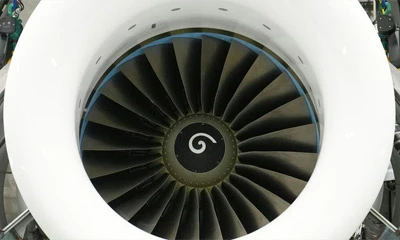
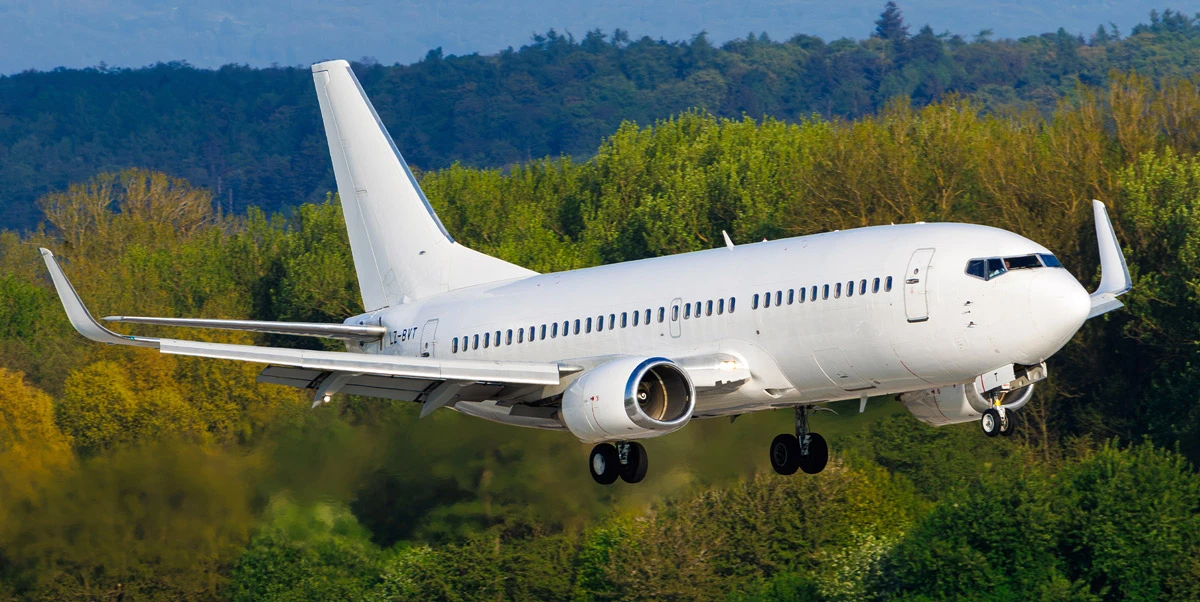
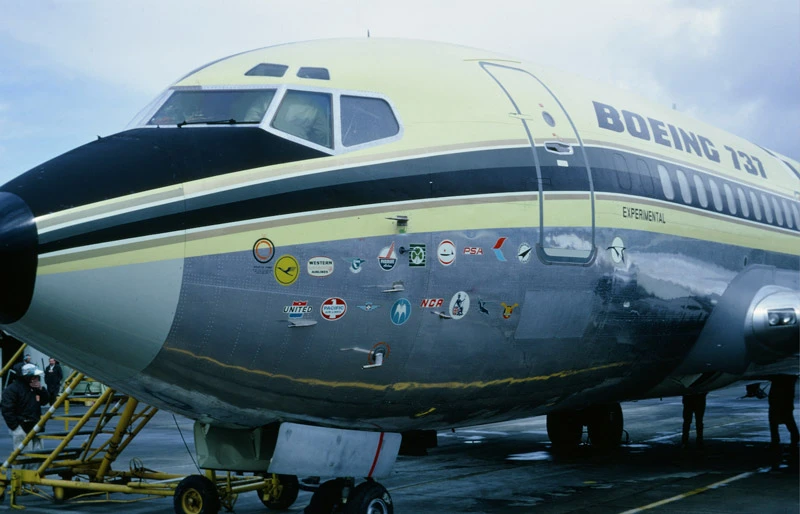
Initially, the Boeing 737-100 met with ridicule: its wingspan was about the same as its length, giving it a stocky, almost chubby appearance. But over more than half a century, the design of the 737 has undergone a remarkable evolution. While the leading edge of the vertical stabilizer on the early 737-100 and -200 models still ran in a gentle curve from top to bottom, from the 737-300 onward it was replaced by a distinctive kink—an adaptation to the longer fuselage, which required less leverage. The change in the engine nacelles was also striking: instead of hanging under the wings as before, starting with the 737-300 they were moved further forward, and their previous cigar shape became significantly more voluminous. Due to the low ground clearance, they were given the characteristic “fish mouth” air intake—an aerodynamic feature that’s been typical of the 737 ever since.
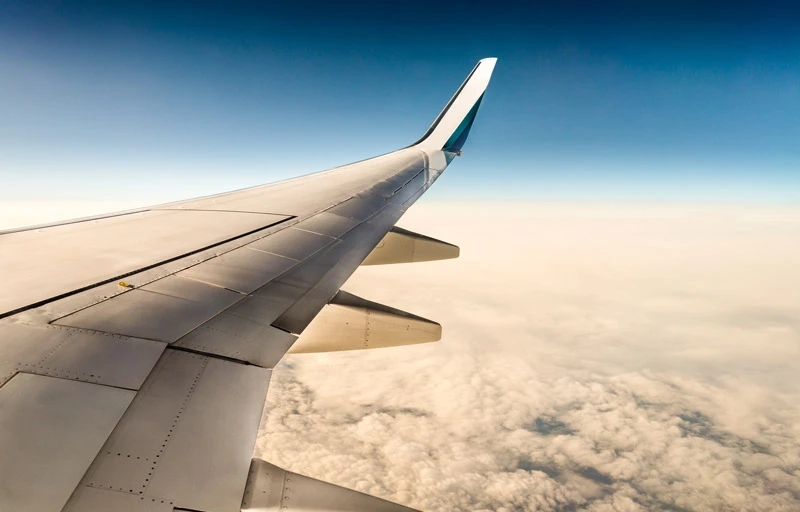

The winglets used on the Boeing 737 are aerodynamic extensions of the wing tips that reduce drag and thus lower fuel consumption.
©Andreas Spaeth
©Andreas Spaeth
©Andreas Spaeth
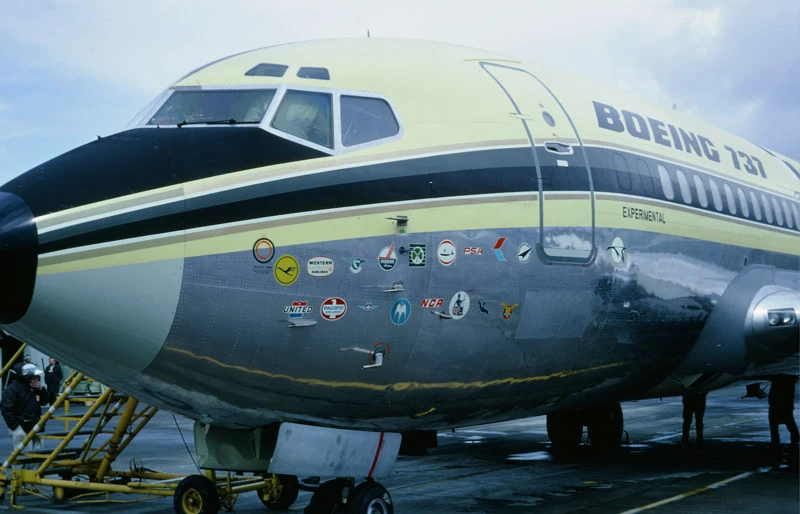
The prototype of the Boeing 737-100, with registration number N73700, made its maiden flight on April 9, 1967, as the first aircraft in the 737 family.
Boeing 737 – Facts, figures, dates
-
Boeing engineer Joe Sutter, later known as the “father of the 747,” was also responsible for the design of the 737. The aircraft was initially supposed to have a T-tail and engines on the aft fuselage, but Sutter moved the engines under the wings. Around 60 percent of the 737’s structure and systems were taken from the 727, whose fuselage was based on the 707.
-
The prototype of the Boeing 737-100, registration number N73700, later flew for NASA, and still exists today as an exhibit in the Museum of Flight at Boeing Field in Seattle.
-
Originally, the 737 was delivered with fold-out stairs on the doors. At the time, many airports didn’t yet have passenger boarding bridges, so these stairs meant the aircraft could be handled more quickly without ground equipment. The landing gear was also deliberately kept low so that cargo in the lower holds could be loaded by hand from the ground.
-
A typical feature of all 737 models is the main landing gear wheels, which can be seen even when retracted. Unlike many other aircraft, they are not completely covered by flaps and remain clearly visible in flight.
-
All modern 737s have special winglets that are bent up and down at the wingtips. In the MAX version, they’re called advanced technology winglets, and enable fuel savings of up to 5.5 percent.
-
According to Boeing, there are over 2,800 737s in the air at any given time—one takes off somewhere in the world about every one and a half seconds. In total, this aircraft type has already carried more than 30 billion passengers; in other words, every person on earth times four.
-
The fuselage length has increased from 28.65 meters for the 737-100 to 43.80 meters for the 737 MAX 10. Maximum passenger capacity has increased from 124 to 230.
Boeing 737
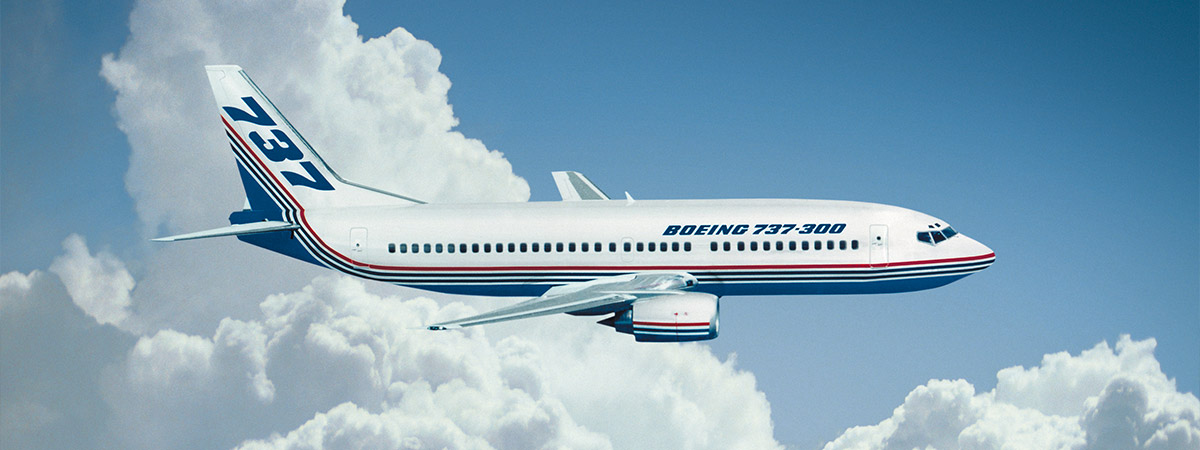
Boeing 737
- Type:
- Twin-engine narrowbody aircraft
- Manufacturer/origin:
- Boeing Commercial Airplanes, Seattle, U.S.
- Maiden flight:
- April 9, 1967 (737-100)
- Entry into service:
- February 10, 1968 (737-100, with Lufthansa)
- Produced:
- 1967–today
- Number built:
- 12,060 (all variants, as of April 2025)
- Length:
- 39.47 meters (737-800)
- Wingspan:
- 34.32 meters (737-800, without winglets)
- Range:
- approx. 5,500 kilometers (737-800)
- Cruising speed:
- 838 km/h (737-800)
- Seats (typical/maximum):
- 175/189 (737-800)
The engines of the Boeing 737: CFM56 and LEAP-1B
The CFM56 is one of the most successful and most manufactured aircraft engines in the world. It was developed by CFM International, a 50:50 joint venture between GE Aerospace and Safran Aircraft Engines. Since this engine first flew in 1974, over 30,000 units have been delivered. It’s used not only in the Boeing 737 (CFM65-3/CFM56-7) but also in the Airbus A320ceo family (CFM56-5). Support for the CFM56-7B is provided by MTU Maintenance Berlin-Brandenburg and MTU Maintenance Zhuhai.
CFM56
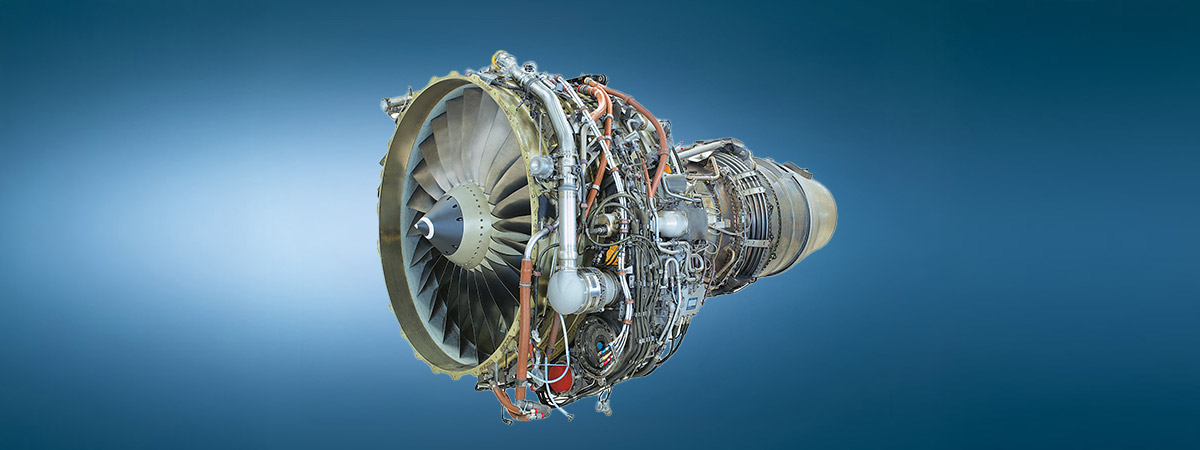
CFM56
- Type:
- Two-shaft turbofan engine
- Max. thrust:
- 34.000 lbf
- Pressure ratio:
- 25.2:1
- Diameter:
- 5.2 ft
- MTU competencies:
- Maintenance at MTU Maintenance Zhuhai (CFM56-5B/-7B), MTU Maintenance Berlin-Brandenburg (CFM56-7B) as well as on-site service activities.
The LEAP-1B is a modern two-shaft turbofan engine developed exclusively for the Boeing 737 MAX. It’s part of the LEAP engine family, also made by CFM International. The LEAP series is the successor to the successful CFM56 engines and was developed to meet the increasing demands for fuel efficiency, lower emissions, and lower operating costs. MTU is responsible for maintaining LEAP-1B engines through its subsidiary MTU Maintenance Zhuhai (China) and, in the future, also through MTU Maintenance Fort Worth (U.S.).
LEAP-1B
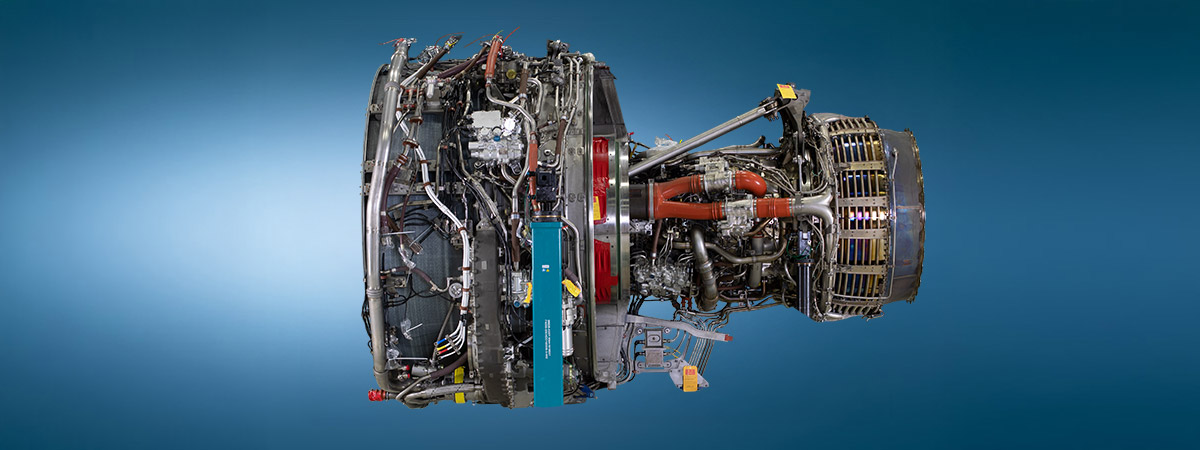
LEAP-1B
- Type:
- Two-shaft turbofan engine
- Max. thrust:
- 28.000 lbf
- Overall Pressure Ratio:
- 41:1
- Height:
- 7.4 ft
- MTU competencies:
- Maintenance by MTU Maintenance Zhuhai and on-site service activities.
“Since its early days at Lufthansa, the 737 has collected an unusually diverse array of nicknames, mostly coined by the pilots themselves.”
Andreas Spaeth
Aviation journalist
Aviation journalist Andreas Spaeth recalls
Since its early days at Lufthansa, the 737 has collected an unusually diverse array of nicknames, mostly coined by the pilots themselves. Initially dubbed the “Olympia Jet” by the marketing department, it was later officially marketed as the “City Jet.” In the cockpits, however, she was simply the “Bobby.”
Some claim that this stands for “Boeing Baby,” but that’s not true. The name actually goes back to a children’s book that Lufthansa published in 1967, Bobby Boeing Spreads His Wings, in which the protagonist is a small, newborn 737. The nickname “Piggy” was also popular—a reference to the machine’s initially chubby appearance. All these names are ultimately an expression of genuine affection.
FAQ
What role did Lufthansa play in the development of the Boeing 737?
Lufthansa was the “midwife” of the 737: In the mid-1960s, it asked Boeing to develop an 82-seat aircraft with a range of 900 kilometers that would be highly compatible with the existing Boeing 727 and Boeing 707 models. As the launch customer, Lufthansa ordered a total of 21 Boeing 737s in 1965, and put the first one into service as soon as 1968. This marked the beginning of an unprecedented success story for this aircraft type.What are the differences between the Boeing 737 Classic, 737 Next Generation, and 737 MAX?
While the fuselage diameter has remained the same since the 1960s, the Boeing 737 has continued to evolve in many ways over the decades, primarily through more modern engines, redesigned wings, and more advanced cockpit technology. The most noticeable change came in 1984 with the introduction of the CFM56 engines and their modified air intakes. The fuselage length also increased steadily in the extended versions, by a total of 15 meters from the 737-100 to today’s longest model, the 737 MAX 10.Why do the engine nacelles on the Boeing 737 have a unique shape?
A distinctive feature of the 737s in service today is the flattened underside of their engine nacelles, which gives the air intake a fish-mouth shape. The change began with the introduction of larger CFM56 engines for the 737-300: Rather than hanging beneath the wings like round cigars, these were positioned slightly ahead of the wings to accommodate their larger diameter. Since the 737’s wings are mounted low, this arrangement is the only way to ensure adequate ground clearance.How do winglets improve the efficiency of the Boeing 737?
In 1998, the German airlines Hapag-Lloyd Flug (now Tuifly) and Air Berlin were global pioneers, becoming the first to retrofit their 737-800s with 2.60-meter-high winglets. The two-piece Split Scimitar Winglets were added later, and are now installed on all 737 MAX aircraft. Overall, the winglets reduce the drag-inducing vortices at the wingtips enough to cut fuel consumption by five to seven percent.What impact did the Boeing 737 MAX accidents have on the aircraft’s further development?
The two accidents led to fundamental technical modifications, particularly to the error-prone MCAS stabilization system. Previously, pilots found it difficult to understand the actions the system would take, which is considered one of the main causes of those accidents. At the same time, the accidents led to significant changes in regulatory approval procedures. As a result, the smallest version, the 737 MAX 7, wasn’t certified until August 2026, and the largest, the 737 MAX 10, is expected to follow by the end of the year.